Find out more here!
Hide me

* You are viewing Posts Tagged ‘free t3’

The “Three Stooges of Belief” of the British Thyroid Association (let’s hope this stupidity doesn’t rub off in the US!)

The British Medical Journal (BMJ) recently came out with yet another thyroid article, benignly titled Diagnosis and treatment of primary hypothyroidism and authored by the British Thyroid Association (BTA),  that at first blush, looks so caring.

Namely, they express deep concern that that since hypothyroid symptoms can mimic other conditions, patients may be getting an incorrect diagnosis which could expose some patients to the harmful effects of excess thyroid hormones, while other serious conditions may go undiagnosed.

And they add: In other patients, adequate replacement with levothyroxine does not resolve symptoms, which are attributed to hypothyroidism rather than other conditions that may coexist, such as depression.

The article continues with:  Normalisation of thyroid stimulating hormone means a return to normal health in most patients with primary hypothyroidism.

In other words, what you have above are the Three Stooges of the stated beliefs of the British Thyroid Association.

Stooge stated-belief #1: “Incorrect diagnosis allow other conditions go undiagnosed” What is inferred is that there are a host of diagnoses of hypothyroidism that are incorrect. Why? Because a wise physician dared to listen to clear symptoms of hypothyroidism or use the free T3, in spite of a so-called “normal” TSH–a lab test which measures a pituitary hormone, not the cells ability to receive enough thyroid hormones.

Stooge stated-belief #2: “If adequate doses of levothyroxine do not resolve symptoms, those symptoms are due to something else.” That is akin to saying if eating 100 calories a day results in malnutrition and starvation, your malnutrition and starvation is due to something else. And one particular symptom they are referring to is depression–a classic symptom of undiagnosed and undertreated hypothyroidism in MILLIONS of individuals around the world.  And isn’t it just odd how that depression resolves itself when the patient is put on Armour and allowed to dose by the elimination of symptoms.

Stooge stated-belief #3: “A normal TSH lab result equals normal health in those treated for hypothyroidism”. Gee, funny how millions of thyroid patients around the world have had a so-called “normal” TSH lab result along with a diverse blend of continuing and CLEAR hypothyroid symptoms.  Additionally, we have a large and growing body of patients who, when they switched to Armour desiccated thyroid or other fine desiccated thyroid prescription meds,  had those symptoms resolved when they were dosed according to the free T3, improved blood pressure, strong heart beat, lowered cholesterol, and complete elimination of symptoms. Patients have learned what works!

When you understand the British Thyroid Association’s hell-bent and rigid stands against Armour desiccated thyroid, their promotion of one of the worst labs ever created to diagnose and dose by, their love affair with the most inadequate thyroid medication ever thrust onto the market by money-grubbing pharmaceuticals (levothyroxine), and their complete failure to listen to patients and recognize continuing symptoms of hypothyroidism while on synthetic T4, you come to realize how meaningful any article on hypothyroidism will be by the British Thyroid Association.

P.S.  Do ya wonder if the British Broadcasting Corporation (BBC) has the smarts to report the other side of the story??

*Want to be informed of these blog posts? Curious what’s on Janie’s mind? Just use the Notification feature on the bottom  of the links to your left.


  • Hip hip!! STTM has new products to help spread the word, here. Great BUMPER STICKERS, too, here. Spread the word--YOU may make a difference in someone’s life.
  • Check out the NEW REVISED patient-to-patient book with even more detail (and which doctors seem to respect more than websites).
  • Need to understand all your best options for thy­roid treat­ment? Go here.
  • Want to keep track of these "fringe website" blog posts? ;-) Curious what’s on Janie’s mind? Use the Blog Notification on the lower left of the links. or use an RSS Feed.

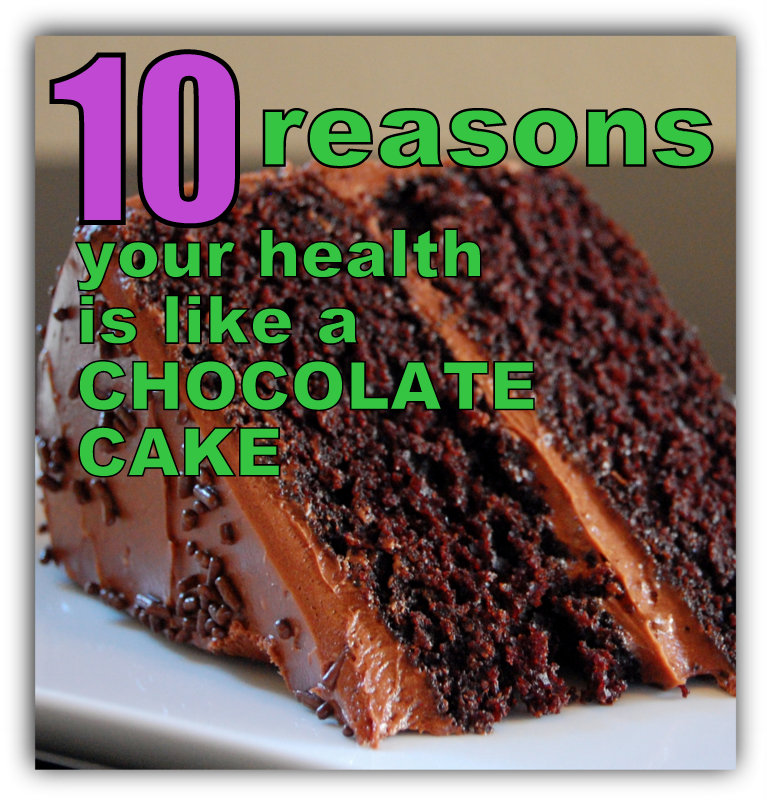
Ten reasons you may still feel bad: health is like a chocolate cake

Want to be notified of my blog posts? Curious what’s on my mind? Use Notifixious to be informed. Look on the bottom left of the links where you can sign up. )

Today I baked a chocolate cake for my son’s birthday. It was excellent. Why? Because it was the result of several important ingredients. Leaving any of them out would have resulted in a cake less than great.

And your health and feel-goods as a thyroid/adrenal patient, including your ability to successfully get off HC,  is like my son’s cake: a combination of ingredients that you have to get right. Below are ten “ingredients” to investigate and find out which may not be right in you for good health and feel-goods.

1) The right amount of cortisol: Too little cortisol or too much cortisol has its consequences. Too little results in thyroid hormone still pooling, continued hypo symptoms, plus hyper in some. Too much can mean easy bruising, rising blood pressure, fluid retention, a round face, etc.  And both can increase anxiety, feeling poorly, etc.  Watch for symptoms and compare your daily averaged temperatures. Also, have you checked your aldosterone?

2) The right amount of desiccated thyroid: I have a friend who was stuck on 3 grains Armour out of habit. But she continued to have hypothyroid symptoms out of habit. I finally convinced her to talk to her doctor. Labs showed her free T3 was just a few points over mid-range, and having a free T3 towards the top seems to work better for most. So she did raise, and it finally did the trick.

3) Optimal B12 levels: Since hypothyroid patients can have digestive/absorption issues, B12 levels can be lower than optimal. Symptoms include fatigue, weakness, feeling faint, breathless, bruising, heart palps or others. Don’t take a chance. Get a B12 test. You want the result to be at the top of the range.

4) Plenty of Ferritin (storage iron): Low ferritin means you have no iron in storage to draw upon. And it also means you are probably anemic.  Additionally, low ferritin adversely affects the conversion of T4 to T3. Symptoms include fatigue, depression, weakness, achiness, breathlessness or others.  Have a ferritin test.  Optimal is 70-90.

5) Good digestion: Hypothyroid patients can have low hydrochloric (HCL) stomach acid levels. That not only contributes to acid reflux because of the overgrowth of bad bacteria, it means you don’t absorb nutrients well (including low B12 mentioned above). As a result, it’s crucial to give that acid back to yourself.  A tablespoon of Apple Cider Vinegar mixed in water and taken twice day helps many. Or try taking Betaine, which is HCL in pill form, or any other quality HCL or digestive product.

6) Recognition and treatment of Gluten intolerance: Some thyroid patients lack a particular digestive enzyme, intestinal glutaminase, that helps digest gluten in various food products. As a result, they don’t absorb nutrients well. Symptoms include bloating & gas, aches, stiffness, fatigue, burning or numbness in arms or legs, rashs or hives, worsened allergies & others. Your chance of have a gluten problem is higher if you have Hashimotos disease. If you suspect a possible problem, eliminate all gluten from your diet. Also consider having your doctor run a Celiac antibodies blood test.

7) Controlled EBV: At least 90% of adults have the Epstein Barr Virus (EBV) sitting dormant in their bodies. EBV is what causes mononucleosis, but you don’t have to have had mono to carry the virus.  Because hypothyroidism lowers your immune system, it’s not uncommon for thyroid patients to have activated EBV. I did, and my symptoms included extreme easy fatigue, ringing in my ears, achiness and some swelling of my lymph glands. Some may have a sore throat return and other symptoms.  Ask your doctor to test EBV. You’ll then need to ask about treatment options, which include beefing up your immune system.

8 ) Sex hormone balance: When your thyroid or adrenals get out of balance, your sex hormones can follow suit, from estrogen dominance to low testosterone.  When estrogen dominance occurs, you can feel depression, fatigue, and sore breasts.  Low testosterone can equal lower energy and mood. Ask your doctor to test all your sex hormones.

9) Taking plenty of supplements: There are a variety of good supplements everyone with thyroid or adrenal issues should take for good health. They include high potency B-vitamins, Vit. C (1000-3000 mg. or to tolerance), Selenium (around 200 mcg), minerals including magnesium, probiotics, Vitamin D (1000 iu), iodine, and others.  In addition to these, I also take CoQ10 (for heart and blood pressure health), and my favorite: a green powder which I stir in my orange juice.

10) Exercise: If you are a couch potato, you’re going to feel like one. Instead, do what it takes to get moving, which promotes all sorts of good health. If you have adrenal fatigue, keep it very light and easy.  If you just have hypothyroidism, get out and walk.

P.S. My chocolate cake: I think cake mixes are just as good as homemade. I use Devils Food Cake. But the icing is ALWAYS homemade: cream one stick butter, add about 4 cups powdered sugar, 1/2 cup cocoa, then cream or half-n-half.  Shake some sea salt in. Add two tsp. vanilla.  Beat, beat.  Taste. Modify as needed. YUM.


  • Hip hip!! STTM has new products to help spread the word, here. Great BUMPER STICKERS, too, here. Spread the word--YOU may make a difference in someone’s life.
  • Check out the NEW REVISED patient-to-patient book with even more detail (and which doctors seem to respect more than websites).
  • Need to understand all your best options for thy­roid treat­ment? Go here.
  • Want to keep track of these "fringe website" blog posts? ;-) Curious what’s on Janie’s mind? Use the Blog Notification on the lower left of the links. or use an RSS Feed.

Fifteen Most Annoying Phrases ever to come out of a doctor’s mouth

In honor of 2009,  a year we hope to see bold changes in the medical system, Stop the Thyroid Madness presents the Fifteen Most Annoying Phrases From the Mouths of Doctors. (Note that the word “Armour” has been used for simplicity sake; any prescription-grade desiccated thyroid product can be inserted there.)

Here’s raising our New Year’s stemmed glasses to change!

15) I’ll see you in eight weeks.
14) Here’s a script for [insert any non-thyroid medication to bandaid continuing hypo symptom]
13) The free T3 lab test is not necessary.
12) Your symptoms do not warrant a thyroid medication.
11) You’re tired because you are [insert any label like "a mother" "menopausal", etc]
10) That has nothing to do with your thyroid.
9) I can find nothing wrong with you.
8 ) You need to eat less and exercise more.
7) Your TSH is too low.
6) The TSH test is [insert any positive description, like "a reliable marker" or "sensitive measure"]
5) I do not believe in Armour.
4) Armour is [insert any negative adjective/description like "unstable" or "hard to regulate"]
3) You’re depressed.
2) You are hyper.

….and tah-dah, the #1 most annoying phrase that comes out of the mouth of a doctor:

1) You are normal.


  • Hip hip!! STTM has new products to help spread the word, here. Great BUMPER STICKERS, too, here. Spread the word--YOU may make a difference in someone’s life.
  • Check out the NEW REVISED patient-to-patient book with even more detail (and which doctors seem to respect more than websites).
  • Need to understand all your best options for thy­roid treat­ment? Go here.
  • Want to keep track of these "fringe website" blog posts? ;-) Curious what’s on Janie’s mind? Use the Blog Notification on the lower left of the links. or use an RSS Feed.

Doctors still have a long way to go a.k.a. Those symptoms might just be the thyroid!

Just as I was finishing up the post below about a short summary on the Endocrinology Today website, I saw a link at the bottom of the page that interested me.  It took me to a blog post on the same site from December 10th titled “Why can’t it be my thyroid?”.

And a slew of thyroid patients around the world, as well as a growing body of doctors,  would completely disagree with this post.

Namely, a DO explains the problem of patients arriving in doctors offices with “innumerable possible symptoms of hypothyroidism” including “fatigue, cold intolerance, decreased energy, weight gain, depression, hair loss, low libido, menstrual irregularity and others.”

Yet, he bemoans, these patients have a “normal TSH” which is “well within the normal laboratory reference range.” He also refers to their normal free T3 and free T4, and states there is no history to suggest pituitary dysfunction or that the TSH is unreliable.”

He then proceeds to pat himself on the back because he 1) will treat some patients with a high-normal TSH and other clinical features,  2) he will treat to a low-normal TSH of less than 2.0, but like the good-boy-doctor, “still within the normal laboratory reference range” and 3) he will not induce iatrogenic hyperthyroidism, even if symptoms persist. (yikes)

“Iatrogenic hyperthyroidism”??  Since “iatrogenesis” refers to harmful medical procedures, he’s probably referring to a TSH below the range, which in his mind, equates to hyperthyroidism.

***Then comes the observation that has made many thyroid patients shiver, since so many doctors have said it: because he feels that adding T3 to T4 has more negative results than positive, he explains to his patients that there may be causes of their symptoms besides the thyroid.”

THUD.

So here is my 6-point response to any doctor who might share these beliefs:

1) There’s hardly a thyroid patient around who hasn’t had a so-called “normal” TSH in spite of clear and obvious hypothyroidism.  The TSH lab test frequently lags behind what is reality in the body, and has been doing so since it’s creation in the early 1970′s (see Chapter 4 in the Stop the Thyroid Madness book for history).

2) Having a “normal” free T3 and free T4 means nothing. It’s “where” the result falls in that range that means something. i.e. patients all around the world are noticing that having a free T3 mid-range or lower in the presence of hypothyroid symptoms is usually a BINGO lab result pointing to hypothyroidism.

3) Exactly because doctors tend to dismiss clear hypothyroid symptoms as “something else” thanks to a lousy TSH reference range, a burgeoning number of thyroid patients are falling into adrenal fatigue with its low cortisol, which serves to mess them up even more.

4) A huge body of thyroid patients who are on desiccated thyroid hormones (aka Armour, Naturethroid, etc), and who finally have a complete removal of symptoms with a normal temperature and heartrate, also have a suppressed TSH lab result, and not one iota of “iatrogenic hyperthyroidism.”

5) When it appears that adding T3 to T4 is having negative effects, the problem is most likely adrenal fatigue that needs correction, and/or low ferritin, NOT deciding that the symptoms must be from another cause or T3 doesn’t work.

6) “Fatigue, cold intolerance, decreased energy, weight gain, depression, hair loss, low libido, menstrual irregularity and others” may be shared in other conditions, but you are most likely missing CLEAR symptoms of hypothyroidism, both in the undiagnosed patient with a so-called normal TSH, or with a patient treated with the lousy thyroxine, which leaves most everyone with continuing hypothyroid symptoms.

“I’m sorry. It IS your thyroid” is exactly what patients need to hear.


  • Hip hip!! STTM has new products to help spread the word, here. Great BUMPER STICKERS, too, here. Spread the word--YOU may make a difference in someone’s life.
  • Check out the NEW REVISED patient-to-patient book with even more detail (and which doctors seem to respect more than websites).
  • Need to understand all your best options for thy­roid treat­ment? Go here.
  • Want to keep track of these "fringe website" blog posts? ;-) Curious what’s on Janie’s mind? Use the Blog Notification on the lower left of the links. or use an RSS Feed.

The dirty-yellow brick road to ADRENAL FATIGUE…are you headed there??

How many doctors can I strangle with my bare hands?? Grrrrrrrrrrr.

Today, I am once again appalled and saddened by the endless body of thyroid patients who continue to plummet into the abyss of adrenal fatigue, day after day after day. And it just never needs to happen if doctors would simply pay attention and be informed.

Belinda is the perfect example. She didn’t participate in thyroid patient groups anymore, living her life happily, because she thought her post-RAI thyroid treatment was under control, being on 2 grains of Armour for a year. But suddenly, she felt the need to return to her groups and seek feedback. Because she has become more irritable and moody, has a hard time falling asleep, and feels frequently anxietal. Labs are redone, and she finds herself with a slightly over-range free T3 and a very suppressed TSH. Her doctor decides to lower her thyroid meds, which in turn improves her insomnia and anxiety, but weight starts piling on. She’s confused and wonders how she can find her balance between being on too little with unwelcome weight gain and being on too much with uncomfortable anxiety and insomnia.

What Belinda didn’t get, and what her doctor didn’t get, is that Belinda had now joined the dubious camaraderie of those with adrenal fatigue, a needless condition of over-stressed and under-functioning adrenals. As a result, T3 in Armour starts to pool in the blood, causing anxiety, insomnia, and all sorts of low cortisol symptoms. Thyroid patients just like Belinda have to first discover what is going on, then face the complicated balancing act of treating adrenal fatigue AND hypothyroidism. And it’s a path that never needed to happen.

WHAT IS POTENTIALLY TAKING YOU DOWN THE DIRTY-YELLOW BRICK ROAD TO ADRENAL FATIGUE??

1) Being undiagnosed, or being dosed by, the faulty TSH lab test and its dubious “normal” range, which will leave you with lingering hypothyroid symptoms. (Belinda’s 2 grains tells me she was being dosed by the TSH)
2) Being treated by T4-only medications like Synthroid, Levoxyl, Eltroxin, et al, which end up teasing your adrenals to work harder to take up the slack of an inadequate treatment.
3) Lowering your expectations of what “normal” is. No, it’s not normal to have less stamina than others, to be on an anti-depressant to bandaid your hypo depression, to feel colder than others, to require frequent naps, to feel the need to avoid people, to be bothered by lights or noises, to be told by those you love that you are too defensive or over-reactive…and so on.

I hope anyone reading this comes to an understanding that you canNOT enter your doctor’s office as if you are entering the throne of a god. Your doctor, no matter how educated or dedicated, may not have a strong understanding of the role of adrenal function in relationship to bad treatment via T4-only meds or the TSH lab range. You may have to bring this knowledge to your doctor, or find another one who is either learned, or open-minded. Because your chances of having adrenal fatigue are huge if you are on T4, if the TSH is worshipped by your doctor whether on T4 or desiccated thyroid, or if you keep walking into the doctor’s office and hang your own knowledge on the hook outside his or her door.

(See Deborah’s story about ceasing to smoke with adrenal fatigue)


  • Hip hip!! STTM has new products to help spread the word, here. Great BUMPER STICKERS, too, here. Spread the word--YOU may make a difference in someone’s life.
  • Check out the NEW REVISED patient-to-patient book with even more detail (and which doctors seem to respect more than websites).
  • Need to understand all your best options for thy­roid treat­ment? Go here.
  • Want to keep track of these "fringe website" blog posts? ;-) Curious what’s on Janie’s mind? Use the Blog Notification on the lower left of the links. or use an RSS Feed.