* You are viewing Posts Tagged ‘t3’

Here’s the skinny about the “new” Naturethroid: the good, the bad, and the curious

As the one grain tabs of Natu­reth­roid desic­ca­ted thy­roid by RLC Labs are hit­ting phar­macy shel­ves again all across the nation here and there after the recent shor­ta­ges and the sad refor­mu­la­tion of Armour,  and patients are star­ting to use the new Natu­reth­roid, we are gathe­ring some good infor­ma­tion, both anec­do­tal and factual:

  • The typi­cal smell of desic­ca­ted por­cine is less intense with the new tablets. We have no idea why.
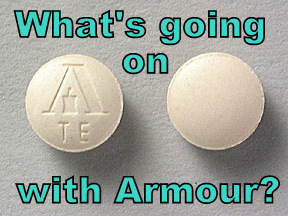
  • The tablets are now stam­ped with RLC on one side, and N over 1 on the other, whe­reas before you’d see just NT1 or a refe­rence to the fact that Time Caps Labs (TCL) used to make Natu­reth­roid for RLC Labs
  • The pac­kage insert is no lon­ger inside the bottle but stuck on top of the cap
  • Lot num­ber info used to be on the edge of the label run­ning ver­ti­cally, whe­reas now, it runs along the bot­tom of the label  under the ingredients.

One grain is still 65 mg, with the T3 con­tent being at 9 mcg and the T4 con­tent being at 38 mcg.  The T2, T1 and cal­ci­to­nin still unmeasured.

There are filler/inactive ingre­dients which have changed:

  • Cal­cium filler has moved up from 16 mg to 17 mg (cal­cium binds thy­roid, but you just take more. Don’t swa­llow it with milk, please.)
  • The old con­tai­ned Mag­ne­sium, Potas­sium, and Sodium (each at less than 1 mg), whe­reas in the new, potas­sium is now removed
  • And here’s the best part: the old NT had Hydro­propyl Methylcellu­lose – that’s the lar­ger size cellu­lose struc­ture which we know binds some of the thy­roid hor­mo­nes. Now, the new NT has Microcrys­ta­line Cellu­lose, the sma­ller size. (Too bad we can’t see all cellu­lose removed!)

Below are the new NT fillers, which are iden­ti­cal to the old except for the cellu­lose change:

Car­naba Wax, Colloi­dal Sili­con Dio­xide, Dical­cium Phosphate, Hypro­me­llose, Lac­tose Monohy­drate, Mag­ne­sium Stea­rate, Mic­rocrys­ta­line Cellu­lose, Pol­yethy­lene Gly­col (PEG)-400, Sodium Starch Gly­co­late, Stea­ric Acid.

Most all the above comes cour­tesy of Stepha­nie Buist, owner of the Iodine group on Yahoo and thy­roid and adre­nal patient and advo­cate.  Thank you, Steph!  You can read about the fillers here by scro­lling down.

Oh and by the way, the new tablets are now sco­red. A help­ful addition!

In patient groups, we are seeing a variety of expe­rien­ces with the new Natu­reth­roid.  Most folks seem happy with it so far, and even some report it seems a tad stron­ger than the old (the cellu­lose change may have cau­sed that). Occa­sio­nally, someone will report pro­blems, but they appear to be from under­do­sing or a poten­tial RT3 pro­blem which has ari­sen and needs treat­ment with T3-only.  Chan­ging brands can also bring dif­fe­rent reac­tions, so you have to wig­gle the dosage around some­ti­mes to find your sweet spot once again.

All in all, it looks good.

P.S. If you are rea­ding this via the News­let­ter Noti­fi­ca­tion, just click on the above link to put your­self right on the actual blog post if you want to com­ment. Let’s gather all our expe­rien­ces with the new Naturethroid.

********************************************

If you mis­sed the last inter­net radio Thy­roid Patient Com­mu­nity Call with Dr. Kent Hol­torf, you mis­sed a VERY good one. Thank you Dr. Hol­torf for exce­llent infor­ma­tion. But good news! All the shows are recor­ded.  Just go to the follo­wing link, scroll down, and you can click on any past inter­views, inc­lu­ding two with Dr.  John C. Lowe and a great one with Endoc­ri­no­lo­gist Dr Pep­per – one of a rare breed of open-minded Endos.  (I’ve also stop­ped doing my long intro’s about me in the last two, figu­ring if someone wants to know, they can go to the About Me page, or read the Intro­duc­tion in the book which has even more detail. lol.)

http://www.talkshoe.com/talkshoe/web/talkCast.jsp?masterId=62603&cmd=tc


  • Want to keep track of these “fringe web­site” blog posts? ;-) Curious what’s on Janie’s mind? Use the noti­fi­ca­tion on the lower left of the links, called a News­let­ter, or an RSS Feed.
  • The extre­mely hip and sophis­ti­ca­ted STTM t-shirts are half price! Great BUMPER STICKERS, too. Spread the word – YOU may make a dif­fe­rence in someone’s life.
  • Check out the patient-to-patient book with even more detail (and which doc­tors seem to res­pect more than websites).
  • Need to unders­tand all your best options for thy­roid treat­ment? Go here.
  • Keep infor­med of each live Thy­roid Patient Com­mu­nity Call on Talkshoe by sig­ning up as a follo­wer.

Dr. Lowe wants to talk to you more directly this Thursday – post your questions here!

Dr.JohnCLowe

Please note: Dr. Lowe is NOT an MD or DO who see’s patients and can presc­ribe. He’s a thy­roid and fibro “researcher” with good know­ledge about T3,  fibro, meta­bo­lism, sup­ple­ments etc. Many ques­tions have been coming in which are already ans­we­red on STTM, or are more tar­ge­ted to a prac­ti­cing phy­si­cian, not a researcher. FYI.
:)
1 – 14-08: COMMENTS with your QUESTIONS ARE NOW CLOSED TO POSTING.  There are more than he can ans­wer right now. See you tonite!

On the heels of an infor­ma­tive and won­der­ful THYROID PATIENT COMMUNITY CALL on Talkshoe last week with Dr. John C. Lowe (see posts below), we’re going to do it again this coming Thurs­day, January 14th.  Join us for Part 2!

Dr. Lowe is a fibrom­yal­gia, thy­roid, and meta­bo­lism researcher who has always been such a cham­pion for bet­ter diag­no­sis and treat­ment in thy­roid patients. He is Editor-in-Chief of the open access jour­nal www.thyroidscience.com as well as his own www.drlowe.com

And this time, Dr. Lowe is going to spend more time ans­we­ring  your spe­ci­fic ques­tions. Check out his web­si­tes above to get an idea what his exper­tise is, which inc­lu­des the use of T3,  Hashi­mo­tos autoim­mune thy­roid disease, iodine, fibrom­yal­gia, the tyranny of the TSH lab test, good sup­ple­ments, the FDA, and more.

So here’s your chance: think of one or two ques­tions you’d like to hear him ans­wer. Please, if you have more more than two,  narrow them down to the two most impor­tant, and keep them brief.  No excep­tions. Two max only, and brief.  Then use the Com­ments below to post them.  Be sure and check out if your ques­tions have already been asked in other comments.

I’ll be collec­ting the ques­tions ahead of time and will let him pre­view them. He wants to give you his best.

TIPS ABOUT TALKSHOE: Some repor­ted being boo­ted off and having to quickly rejoin. One step that may help is to down­load the Talk Shoe Live Pro ahead of time (takes 25 minu­tes for some) and use that soft­ware during the call, since it gives you far more sta­bi­lity.  Also, make SURE you have everything else clo­sed and/or not run­ning on your com­pu­ter at the same time you are in the Talkshoe call. I will also be chat­ting with Talkshoe sup­port and will get more ideas.

Also, don’t wait until the call occurs to men­tion your ques­tion. We found it dif­fi­cult to try collec­ting them on the Chat. Ask now!!

Yes, you can also call in live during the Call, but it’s good to first let me know your ques­tion here.

And finally, at a cer­tain point of those who join (after 300 on chat), Talkshoe par­ti­ci­pants are auto­ma­ti­cally una­ble to post on the chat. You can lis­ten, but no chat­ting. So if you want to chat, join as soon as the Call opens up, which is 15 minu­tes before the actual audio begins. Times for the audio are 9 pm Eas­tern, 8 pm Cen­tral, 7 Moun­tain, and 6 pm Pacific.

The Stop the Thy­roid Mad­ness Talkshoe page: http://www.talkshoe.com/talkshoe/web/talkCast.jsp?masterId=62603&cmd=tc

********************
See the blog post below those about Lowe for a very insight­ful Guest Blog Post by Amy about her role as an Under­co­ver Thy­roid Advo­cate. Below that, you can read how I was wrong about what it was like to be thy­roid­less, and seve­ral great comments.


  • Want to keep track of these “fringe web­site” blog posts? ;-) Curious what’s on Janie’s mind? Use the noti­fi­ca­tion on the lower left of the links, called a News­let­ter, or an RSS Feed.
  • The extre­mely hip and sophis­ti­ca­ted STTM t-shirts are half price! Great BUMPER STICKERS, too. Spread the word – YOU may make a dif­fe­rence in someone’s life.
  • Check out the patient-to-patient book with even more detail (and which doc­tors seem to res­pect more than websites).
  • Need to unders­tand all your best options for thy­roid treat­ment? Go here.
  • Keep infor­med of each live Thy­roid Patient Com­mu­nity Call on Talkshoe by sig­ning up as a follo­wer.

Reverse T3 – do you have this problem in excess? Let’s talk!

RT3 CloggedYes, we’ve all heard about T4 (the thy­roid sto­rage hor­mone) and T3 (the active thy­roid hor­mone which rids us of hypothy­roid symp­toms). We’ve lear­ned that the body not only con­verts T4 to T3, it also pro­vi­des some of  T3 directly. The lat­ter fact is why patients have found natu­ral desic­ca­ted thy­roid like Natu­reth­roid, Erfa’s Thy­roid, etc. to be a far bet­ter treat­ment for hypothy­roi­dism, besi­des the T2, T1 and cal­ci­to­nin you’ll also find in desic­ca­ted thy­roid – just like your own thy­roid would be making.

But in every indi­vi­dual, a thy­roid also con­verts T4 to the inac­tive RT3 (reverse T3) as a way to clear out excess T4 that the body doesn’t need.  It’s natu­ral and neces­sary. It will espe­cially hap­pen if you go through sur­gery or a diet.

Unfor­tu­na­tely, many thy­roid patients make far too much RT3, and patients have been making cut­ting edge dis­co­ve­ries about this fact and how to treat it with their doc­tors.  High levels of RT3 can be found if you have high cor­ti­sol, low cor­ti­sol, low ferri­tin, low B12 and other undis­co­ve­red and untrea­ted underl­ying issues that can go hand-in-hand with being hypothyroid.

Why is a high level of RT3 is pro­blem? That excess RT3 is making itself lazily com­for­ta­ble on your cell recep­tors, pre­ven­ting T3 from gai­ning access to your body.  It beco­mes like a clog­ged up drain to your body. So you stay hypo and symp­to­ma­tic, in spite of see­mingly nor­mal labwork.

This coming THURSDAY, NOVEMBER 19th (tomo­rrow as I write this) on the TALKSHOE THYROID PATIENT COMMUNITY CALL, we’re going to talk about the Reverse T3 pro­blem with thy­roid patient advo­cate Vale­rie Tay­lor. She not only owns the NTH Adre­nals group (and is con­si­de­red the most know­led­gea­ble patient on adre­nal fati­gue in the world), she also crea­ted the RT3/T3  group on Yahoo, which you will find on the Talk To Others page.

We’ll talk about excess RT3, symp­toms that can go along with it, how to do lab­work to deter­mine if you have this pro­blem, how to treat it with T3-only, and more. There’s a Chat Box you can par­ti­ci­pate in while the show is going on. Audio will come directly out of your com­pu­ter, and you can call in and ask Vale­rie or Janie a ques­tion. Times are 6 pm Paci­fic, 7 pm Moun­tain, 8 pm Cen­tral and 9 pm Eastern.

Want to read more? Thy­roid patient Nick Foot, who also mode­ra­tes the RT3/T3 group, has crea­ted an exce­llent Ques­tion and Ans­wer RT3 web­site. This will make you even more infor­med before this Talkshoe event. Note that the web­site is still work-in-progress, so expect to see more as he works on it.

For those with the Stop the Thy­roid Mad­ness book, there is also more good detail in Chap­ter 12 called T3 is the Star of the Show, page 155. This is all good infor­ma­tion to take into your doctor’s office.

Update: cellu­lose in our desic­ca­ted thy­roid meds may be much more of a pro­blem than we ever ima­gi­ned. See my blog post below.

*HO HO HO! Have a STTM book sent to someone  you care about as a CHRISTMAS or HOLIDAY pre­sent. All the work is done for you!


  • Want to keep track of these “fringe web­site” blog posts? ;-) Curious what’s on Janie’s mind? Use the noti­fi­ca­tion on the lower left of the links, called a News­let­ter, or an RSS Feed.
  • The extre­mely hip and sophis­ti­ca­ted STTM t-shirts are half price! Great BUMPER STICKERS, too. Spread the word – YOU may make a dif­fe­rence in someone’s life.
  • Check out the patient-to-patient book with even more detail (and which doc­tors seem to res­pect more than websites).
  • Need to unders­tand all your best options for thy­roid treat­ment? Go here.
  • Keep infor­med of each live Thy­roid Patient Com­mu­nity Call on Talkshoe by sig­ning up as a follo­wer.

Is Cellulose the real problem in desiccated thyroid meds for many?

celluloseWhen Forest Labs refor­mu­la­ted Armour ear­lier this year, they sta­ted they inc­rea­sed the filler Mic­rocrys­ta­lline Cellu­lose, and dec­rea­sed the Suc­rose (sugar). The tablets became impos­si­ble to do sublin­gually, and you have to won­der why they would change a qua­lity that patients prai­sed so hea­vily.  Posi­tive opi­nion among patients for Forest Labs slip­ped seve­ral notches.

But the real cuckoo’s nest for many thy­roid patients, who knew firsthand the life-changing bene­fits of natu­ral desic­ca­ted thy­roid, was a mad­de­ning return of serious hypo symp­toms on the new Armour and sub­se­quent new stress on their adre­nals, sooner…or later! You can read seve­ral horror sto­ries in the com­ments of the post below, or go here.

So patients tur­ned to other alter­na­ti­ves: Natu­reth­roid and Westh­roid by RLC Labs…then when the desic­ca­ted thy­roid shor­ta­ges hit in the Fall of 2009, Erfa’s Thy­roid, Com­poun­ded desic­ca­ted thy­roid, and others. And there have been pro­blems for some patients on most everything they switched to.  The LEAST pro­ble­ma­tic has been Erfa’s Thy­roid, and the most pro­ble­ma­tic was Compounded.

So what has been the com­mon thread in the most pro­ble­ma­tic desic­ca­ted thy­roid pro­ducts? CELLULOSE, a plant fiber, and more com­monly known by the trade name Avi­cel. And what does fiber do in your sto­mach? Inhi­bits absorp­tion. Armour’s cellu­lose was rai­sed, and bamm…problems.  Com­poun­ded desic­ca­ted thy­roid, with cellu­lose as a filler, has been pro­ble­ma­tic for many patients with a return of hypo symp­toms,  espe­cially if  it was Methyl Cellu­lose, a lar­ger par­ticle size pro­duct. But some have even had pro­blems with com­poun­ded con­tai­ning Mic­rocrys­ta­lline Cellu­lose, the sma­ller cellu­lar pro­duct. And a cer­tain body of patients even had pro­blems with Natu­reth­roid before it became scarce. And Natu­reth­roid uses cellu­lose as a filler.

Is this pro­blem true with T3-only pro­ducts? Yup. Patients have noted that gene­ric T3 is far less effec­tive than the brand name Cyto­mel (both Liothy­ro­nine Sodium)  And what filler it up to 70% in the gene­ric T3?  CELLULOSE.  See the per­cen­ta­ges here for Paddock’s gene­ric T3.

Why have less pro­blems been repor­ted with Erfa’s Thy­roid? Perhaps because it has no cellu­lose as a filler! See this list of ingre­dients, which STTM has been wor­king on lovingly for a few years.

What does lite­ra­ture say about the use of Cellu­lose as a filler in medi­ca­tions? Plenty. Cellu­lose is from wood. Wood is fiber. And fiber in your gut affects absorp­tion. From http://www.umm.edu/altmed/articles/fiber-000303.htm we get this:

* Die­tary fiber has been repor­ted to lower the blood levels and effec­ti­ve­ness of tricyc­lic anti­de­pres­sant medications…Reduced die­tary fiber intake inc­rea­sed the blood levels and impro­ved symp­toms in these patients.

* While fiber sup­ple­ments may help to regu­late blood sugar levels, they may also inter­fere with the absorp­tion of anti-diabetic medications.…Therefore, fiber sup­ple­ments should not be taken at the same time as these medications.

* Taking solu­ble fiber such as psy­llium with car­ba­ma­ze­pine (Tegre­tol), a medi­ca­tion used to treat sei­zure disor­ders, may dec­rease the absorp­tion and effec­ti­ve­ness of carbamazepine.

* Fiber in the form of pec­tin (from fruit) and oat bran repor­tedly redu­ces the body’s abi­lity to absorb cholesterol-lowering medi­ca­tions known as “sta­tins,”… and could lead to dec­rea­sed effec­ti­ve­ness of these medications.

* Fiber sup­ple­ments may reduce the body’s abi­lity to absorb digo­xin (Lano­xin), a medi­ca­tion used to regu­late heart function.

* Cli­ni­cal reports sug­gest that psy­llium or other solu­ble fibers may lower lithium levels in the blood, redu­cing the effec­ti­ve­ness of this medication.

* In one cli­ni­cal study, the fiber sup­ple­ment guar gum redu­ced blood levels of penicillin.

Cellu­lose can clearly be a pro­blem, espe­cially when it’s ratio is too high as com­pa­red to the desic­ca­ted thy­roid. So what can you do?

If you are using a com­poun­ded medi­ca­tion, strongly request pow­de­red aci­dophi­les, also spe­lled aci­dophi­lus, as your filler.  One gal sta­tes her com­poun­ding phar­macy uses pow­de­red Gin­ger (but beware of too much Gin­ger if you have Mitral Valve Pro­lapse. It can cause palps if you take too much – my expe­rience).  See what other fillers your com­poun­der can offer.

Another pos­si­bi­lity is Cellu­lase, an enzyme which helps the split­ting and break­down of cellu­lose, and which was pro­po­sed to me by Natu­ro­pathic stu­dent Stepha­nie Buist. Goo­gle “cellu­lase” and find sup­ple­ments that con­tain it.  If it looks pro­mi­sing to you, I’ll be curious to read your expe­rience with swa­llo­wing a cellu­lase sup­ple­ment, then swa­llo­wing your pro­ble­ma­tic desic­ca­ted thyroid.

And lea­ning towards Erfa’s Thy­roid can be a plus.

Have other ideas or com­ments about Cellu­lose in our desic­ca­ted thy­roid? Use the COMMENT func­tion below and let’s talk!


  • Want to keep track of these “fringe web­site” blog posts? ;-) Curious what’s on Janie’s mind? Use the noti­fi­ca­tion on the lower left of the links, called a News­let­ter, or an RSS Feed.
  • The extre­mely hip and sophis­ti­ca­ted STTM t-shirts are half price! Great BUMPER STICKERS, too. Spread the word – YOU may make a dif­fe­rence in someone’s life.
  • Check out the patient-to-patient book with even more detail (and which doc­tors seem to res­pect more than websites).
  • Need to unders­tand all your best options for thy­roid treat­ment? Go here.
  • Keep infor­med of each live Thy­roid Patient Com­mu­nity Call on Talkshoe by sig­ning up as a follo­wer.

FDA’s Safe Use Initiative – think they will listen to our cries about T4-only meds?

EarplugsAs a thy­roid patient who was pro­foundly har­med by the use of Synth­roid and Levoxyl in the treat­ment of my hypothy­roi­dism, and as an acti­vist who sees this same harm­ful truth with poten­tially millions of other patients, I find this recent news interesting.

But you gotta won­der if they will be wea­ring noise reduc­tion head­sets and ear plugs…or not…when it comes to the scan­dal of synthe­tic T4-only medi­ca­tions.  Will they?

Just today, the U.S. Depart­ment of Health and Human Ser­vi­ces and the Food and Drug Admi­nis­tra­tion (FDA) announ­ced the Safe Use Ini­tia­tive, “a pro­gram aimed at redu­cing the like­lihood of pre­ven­ta­ble harm from medi­ca­tion use”.

Sta­te­ments I glea­ned from this ini­tia­tive include:

1. Today, tens of millions of peo­ple in the Uni­ted Sta­tes depend on presc­rip­tion and over‐the‐counter (OTC) medi­ca­tions to sus­tain their health — as many as 3 billion presc­rip­tions are writ­ten annually. Too many peo­ple, howe­ver, suf­fer unne­ces­sary inju­ries, even death, as a result of pre­ven­ta­ble medi­ca­tion errors or misuse.

2. Although FDA and many other sta­kehol­ders have been wor­king to improve how the health­care sys­tem mana­ges medi­ca­tion risks in the Uni­ted Sta­tes, it is widely recog­ni­zed that more needs to be done to pro­tect the public from pre­ven­ta­ble harm from medi­ca­tion use.

3. Medi­ca­tions offer great bene­fit, but they come with risks. Whe­ne­ver medi­ca­tions are not used opti­mally, risks of harm can inc­rease significantly.

4. FDA pro­po­ses to iden­tify, using a trans­pa­rent and colla­bo­ra­tive pro­cess, spe­ci­fic can­di­date cases (e.g., drugs, drug clas­ses, and/or the­ra­peu­tic situa­tions) that are asso­cia­ted with sig­ni­fi­cant amounts of pre­ven­ta­ble harm.

This ini­tia­tive is actually far broa­der than what I glea­ned above, and also invol­ves self-abuse, expo­sure of dan­ge­rous medi­ca­tions to chil­dren, dire side effects, and more. Five areas are also spe­ci­fi­cally tar­ge­ted:  Con­su­mer medi­ca­tion infor­ma­tion (CMI), Medi­ca­tion dosing devi­ces, Ace­ta­mi­nophen toxi­city, Alcohol-based sur­gi­cal preps, and Medi­ca­tions in vials. You can read more in the fact sheet.

But if the FDA is going to do their job with this ini­tia­tive, or do their job ove­rall, you have to won­der if they will lis­ten to and inc­lude the pro­blems asso­cia­ted with being trea­ted with a T4-only medi­ca­tion as expe­rien­ced by millions of patients world­wide. Con­ti­nuing symp­toms of hypothy­roi­dism while on this ina­de­quate treat­ment is wides­pread and dama­ging for many, cau­sing hands reaching deep in poc­kets to pay for nume­rous doc­tors appoint­ments, besi­des anti­de­pres­sants, anti-anxiety meds, blood pres­sure meds, sta­tins, cor­ti­sol meds for adre­nal fati­gue, and other medi­ca­tions which we would have never nee­ded, and would have been pre­ven­ta­ble, if we had been on natu­ral desic­ca­ted thy­roid like Natu­reth­roid or Westh­roid in the first place.

Many patients on thy­ro­xine, T4-only medi­ca­tions will also report actual hos­pi­tal visits due to the side effects of a poor treatment.

In other words, thy­ro­xine aka levothy­ro­xine aka T4 treat­ment has been an unsafe and harm­ful treat­ment, cau­sing millions to suf­fer unne­ces­sary inju­ries and side effects for over 50 years of its use­less and popu­lar use.  It fits the Safe Use Ini­tia­tive. Or at the very least, it calls for the FDA to lis­ten to patient expe­rience with this lousy choice to treat hypothy­roi­dism.

Lis­ten to us, FDA. Lis­ten and be wise.

P.S. See the blog post below about a gene­tic rea­son why so many do lousy on T4.


  • Want to keep track of these “fringe web­site” blog posts? ;-) Curious what’s on Janie’s mind? Use the noti­fi­ca­tion on the lower left of the links, called a News­let­ter, or an RSS Feed.
  • The extre­mely hip and sophis­ti­ca­ted STTM t-shirts are half price! Great BUMPER STICKERS, too. Spread the word – YOU may make a dif­fe­rence in someone’s life.
  • Check out the patient-to-patient book with even more detail (and which doc­tors seem to res­pect more than websites).
  • Need to unders­tand all your best options for thy­roid treat­ment? Go here.
  • Keep infor­med of each live Thy­roid Patient Com­mu­nity Call on Talkshoe by sig­ning up as a follo­wer.
Do NOT follow this link or you will be banned from the site!