 Thyroid patients are wiser!! They now know what thyroid treatment works, and what doesn’t.
And they’ve also noted common issues that they share with a large percentage of each other…one being INFLAMMATION.
Sometimes, thyroid patients don’t even know where the inflammation exists in their body, except that their high ferritin reveals it, or their C-Reactive Protein or ESR (erythrocyte sedimentation rate or sed rate) lab tests reveal it. Other times, it’s obvious by the pain they notice in their bodies.
Some ways to deal with inflammation, especially for Hashimotos patients, is removing gluten from the diet. Others have to ascertain if they have Lyme disease that needs treatment. Some have neither problem, but inflammation exists anyway!
Many thyroid patients take supplements to help lower that inflammation, which range from Astaxanthin to Ginger to NAC to Curcumin/Turmeric…and/or a combination of them all.
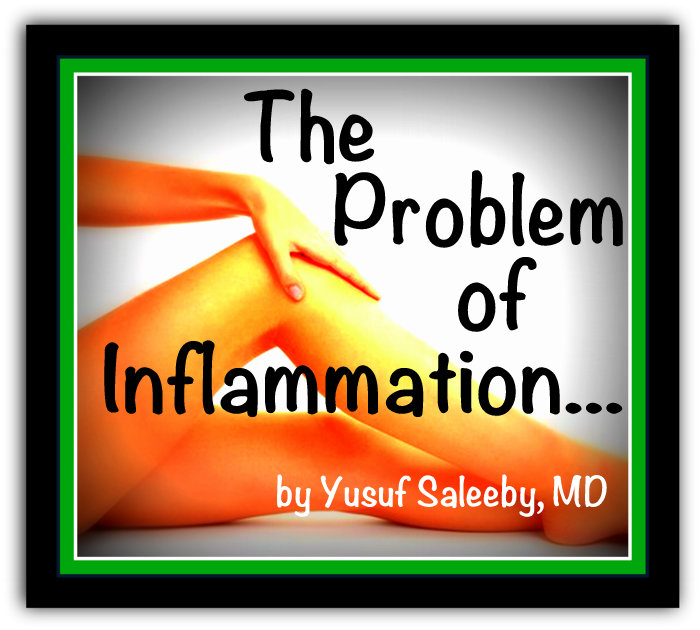
Here’s a great article written by Yusuf Saleeby, MD. He happens to also be a contributor to the new STOP THE THYROID MADNESS II book, which you should read, and/or give to someone you love as a Christmas present!!
The following published in May/June 2014 edition American Fitness magazine.
It has been well known and understood for years that inflammation is harmful. Inflammation essentially kills. Well, not right away or in a big flashy way, but it does hurt our chances for a healthy disease-free existence and does shorten our lifespan. Inflammation has been proven to increase your risk for heart disease, heart attacks and strokes.1-3 Inflammation is also known to increase a person’s risk for cancer.4,5 It is also linked to obesity and metabolic syndrome; even implicated in Parkinson’s and Alzheimer’s Disease.6-8,9-12
In 2011, researchers at Ohio State University found a link between inflammation and a molecule called microRNA-155 (miR-155). What they discovered was in chronic inflammatory conditions, levels of miR-155 rise and this molecule stimulates and allows for spontaneous mutations of cells contributing to tumorigenesis, the mechanism whereby normal cells become cancerous cells.13-16 While cancers are devastating diseases, all deaths due to cancer do not even come close to numbers of Americans who succumb to heart disease and stroke. So for the purpose of this article we will focus on how inflammation is a big silent killer regarding our hearts and brains; our attention will be on cardiovascular and cerebrovascular disease.
To put it simply, inflammation causes undesirable reactions on the inner lining of blood vessels. The combination of inflammation and circulating lipids is a dangerous recipe that produces something called “foam cells”. Foam cells attach to the endothelial lining of our blood vessels, such as the arteries that feed our heart and brain, and once they mature over months to years form arterial plaques. These plaques narrow the blood vessels making it an eventual challenge for oxygen carrying blood cells to pass. Distal tissues to these narrowing arteries are the ones that suffer. When cells do not get the oxygen they need the result is tissue necrosis in the form of a heart attack or a stroke. Another pathogenesis of inflammation is its impact on maturing plaques. It just happens that inflammation can cause, in a rather short time frame, the rupture of these vessel plaques. In doing so, that plaque can quickly obstruct all blood flow quite abruptly and results in significant damage downstream. One of the biomarkers we shall discuss is FDA-cleared for assessment of plaque rupture and risk of stroke.16 Specific clinically available inflammatory markers are now available for the diagnosis and management of chronic inflammatory states which can impact life and health.
With the recent availability of advanced laboratory testing with a number of inflammatory biomarkers, the clinician has the obligation of identifying inflammation and stomp it out before it puts patients at risk for some ugly disease processes. Identifying overt acute inflammation is as easy as feeling a hot knee joint for example, or identifying fever, stiffness, swelling or pain. Measuring it or quantifying it has typically been with the use of the time tested but non-specific erythrocyte sedimentation rate (ESR) and more recently the C-reactive protein (CRP) tests. However, newer, more specific and diagnostically advanced biomarkers of inflammation have arrived on the playing field to help doctors assess and gauge inflammation. They are sensitive enough to pick up harmful levels of inflammation that may go unnoticed to the casual observer (both patient and doctor). Once identified, the measured inflammation can be watched and carefully reduced by prescriptive medications (statin drugs or anti-inflammatory agents as an example), orthomolecular therapies such as glutathione (NAC), resveratrol or turmeric, and lifestyle modifications (smoke cessation, exercise and weight loss).17,18 Reassessing these inflammatory biomarkers allows clinicians to better guide their patients and assure the reduction of this disease causing entity. This article will discuss a few of these cutting edge inflammatory biomarkers that are currently being used in some clinical practices to identify people at risk for heart disease, stroke, neurodegenerative disorders and diabetes. There are other biomarkers available, many used in research and not clinically applicable or practical. At some point in the future they may find clinical application. Scientists are likely to discover even better biomarkers with more specificity and selectivity for certain conditions as research continues in this field. However, for the time being we will examine the PLAC test, the high sensitivity C-Reactive Protein, Fibrinogen, F2-Isoprostanes, Myeloperoxidase, Interleukins 6 & 17a, and Tumor Necrosis Factor-alpha. Preventive medicine physicians are measuring and monitoring these inflammatory markers to reduce the risk of end-organ damage and degenerative disease in their patients.
Lipoprotein-Associated Phospholipase A2 (Lp-PLA2, or PLAC)
The Lp-PLA2 biomarker is an enzyme associated with plaques in the arteries. Carried mostly by LDL-Cholesterol this enzyme in high levels of circulation is found when inflammation is high and plaque rupture in eminent. When levels of this inflammatory marker remain high for long periods of time there is a very high chance for cardiovascular events and risk of ischemic stroke. Prolonged activity of this enzyme is associated with coronary calcification or ‘’hardening of the arteries”. The PLAC test was recently cleared by the FDA to assess the risk of both coronary heart disease and ischemic stroke associated with atherosclerosis.16 Nicotinic acid as well as fenofibrate therapy has effectively treated elevations in Lp-PLA2.19,20
High sensitivity C-Reactive Protein (hs-CRP)
Much like the ESR this biomarker of inflammation is non-specific; it is formed in the liver as a reaction to inflammation occurring in other parts of the body. The high sensitivity CRP is a measure of minuscule amounts of this protein that are typically associated with vascular inflammation. The chronic elevation of this acute phase reactant is used to predict risk of heart attack and undesirable events in those with angina and in those who are having a heart attack. Elevated CRP may be a better predictor of heart disease than elevations in LDL-cholesterol. 21 While Lp-PLA2 elevations can double the risk for heart attack and stroke, having both the Lp-PLA2 and hs-CRP elevated increases heart disease four-fold and stroke risk by a factor of ten. This inflammatory protein responds remarkably well to exercise. 21
Fibrinogen
Fibrinogen will convert to fibrin as blood clots form. So fibrinogen, a protein, is a good measure of acute inflammation and is associated with risks of heart disease. Elevated fibrinogen can cause platelets to clump together or aggregate, increase the viscosity of blood and embellish other clotting factors. There is a strong correlation between elevated levels of fibrinogen and acute ischemic stroke.22 Fibrinogen is therefore a good tool for evaluation of stroke risk and prediction of a future heart or brain event. To reduce this pro-thrombotic state, a reduction of fibrinogen can be accomplished by routine aerobic exercise, smoke cessation, aspirin therapy and omega-3 fish oil supplementation and increasing endogenous glutathione with N-AcetylCystine (NAC) or bioavailable oral/IV glutathione (S-AcetylGlutathione).23
F2-Isoprostanes (F2-Isops)
While the initial implementation of exercise can often raise the F2-Isops levels, eventually sustained regular exercise lowers it to safer levels. F2-Isoprostanes are prostaglandin like compounds which are formed by the oxidation of free fatty acids by free-radicals in circulation. Poor diets, too rich in red meat, a sedentary lifestyle and cigarette smoking all contribute to the elevation of this inflammatory marker. F2-Isops is a strong predictor of coronary heart disease (CHD) as elevated levels cause oxidative stress on arterial walls and the production of atherosclerotic plaques. These isoprostanes also act as potent vasoconstrictors, which can further limit passage of blood cells through already narrowed arteries. Control of triglycerides (TG), diet and exercise combat this marker. Eicosapentaenoic acid (EPA) and docosapentaenoic acid (DHA) are two omega-3 fatty acids that are generally shown in multiple research studies to lower F2-Isoprostanes.23-26
Myeloperoxidase (MPO)
Particular white blood cells (WBC) called polymorphonuclear leukocytes and monocytes produce an enzyme called myeloperoxidase, this enzyme help your immune system fight infections only when your body uses it correctly. With chronic inflammation there is too much MPO released into circulation from WBCs and this hampers the function and bioavailability of nitric oxide. Nitric oxide (NO) is crucial to proper endothelial function in our arterial walls. MPO also causes the oxidation of HDL-C (good cholesterol) and impairs its ability to pull bad cholesterol (LDL-C) away from arteries for recycling. Additionally, the oxidizing effect of MPO on LDL-C contributes to the formation of foam cells and increases the likelihood of plaque rupture. Elevated levels of MPO in the presence of coronary artery calcium (CAC) raise the risk for a coronary event. Aspirin therapy, statin drug therapy (such as atrovastatin (Lipitor®) for example) and proper diet rich in omega-3 fatty acids (fish oil) all help lower MPO.27 Of all the biomarkers discussed here, probably the most detrimental when found elevated is the MPO. Aggressive measures should be taken to reduce this marker, especially over the long term.
Interleukin-6 (IL-6)
Interleukin-6 (IL-6) is a pro-inflammatory cytokine. Cytokines are proteins that act as cell-signaling molecules in the immune system. IL-6 can increase the aggregation of platelets causing clumping and infarction when blood vessels are narrow and blood flow is impeded. IL-6 augments the synthesis of CRP and is thus associated with increased risk of cardiovascular disease (CVD). Elevated levels of IL-6 are associated with a 2 fold increase in diabetes risk and an even higher (3-fold) risk of CVD. We know the blockade of IL-6-receptors by drugs like tocilizumab (Actemra®) in patients with rheumatoid arthritis is helpful, but whether this drug will have a similar effect on reduction of the ill effects of this circulating inflammatory cytokine on the heart or brain remains to be seen.28
Interleukin-17a (IL-17a)
Another inflammatory cytokine that has a role in vascular remodeling and function is Interleukin-17a. Elevated levels of IL-17a are responsible for vascular dysfunction and are found at increased levels in the presence of unstable angina and heart attacks. However, one study pointed out that low levels of circulating IL-17a in the presence of an acute myocardial infarction (AMI) or heart attack had poor outcomes for survival. While some studies show it as a risk factor in the asymptomatic individual, this may be untrue in the acute setting. More research is needed. Hence, blocking this interleukin too aggressively may have unwanted outcomes.29
Tumor Necrosis Factor-alpha (TNF-α)
A pro-inflammatory cytokine referred to as TNF-α is excreted from macrophages (immune system cells that fight infecting microbes). People with the autoimmune and inflammatory disease systemic lupus erythematosus (SLE) are known to be at higher risk for CVD. There is a correlation between the inflammatory TNF marker which is elevated in SLE patients and their CVD risk. Some researchers are inclined to believe that this is what causes the increased risk of heart attacks in this subset of patients. Elevated levels of this cytokine can have a negative effect on sugar metabolism by interfering with insulin receptors. Elevated TNF-α levels result in a two fold increase in CVD risk. Weight loss and statin drug therapy can lower these levels. Controlling this marker’s levels may also reduce the risk of acquiring diabetes.30
So the take home message here is that chronic inflammation is bad for your health and wellbeing. Even acute bursts of inflammation can significantly raise the risk of an acute event such as a heart attack or stroke. A very good illustration of this is found in a study in Mexico City, where air pollution levels are monitored in one of the most polluted cities in the western hemisphere. There were correlations made with rises in AMIs in a population of nursing home patients on particularly dirty air quality days in that city. The elevated air particle count attributed to an acute increase in inflammatory biomarkers and thus triggered heart attacks.31
Besides the impact on cardiovascular health, inflammation is to be avoided for many other reasons, from neurodegenerative diseases such as Parkinson’s and Alzheimer’s disease to development of cancers to destructive and degenerative diseases of our skeletal system. We are now at the cusp of clinically available, specific biomarkers of inflammation that allow doctors to identify those at risk and diligently (with periodic monitoring of serum and urine levels) evaluate therapy that reduce harmful inflammation.
ABOUT THE AUTHOR: Yusuf (JP) Saleeby, MD is a contributing editor for American Fitness magazine. He practices preventive integrative medicine and age management in Murrells Inlet & Greenville, SC. Dr. Saleeby is regional director of a direct access testing site that offers analysis of inflammatory bio-markers. He can be reached at www.saleeby.net or by e-mail at jpsaleeby@aol.com. You can also see his other website here: http://www.getmythyroidfixed.com/
SEE MORE BELOW THE REFERENCES….
©2013-2014
References:
- TUOMISTO, K., ET AL. “C-REACTIVE PROTEIN, INTERLEUKIN-6 AND TUMOR NECROSIS FACTOR ALPHA AS PREDICTORS OF INCIDENT CORONARY AND CARDIOVASCULAR EVENTS AND TOTAL MORTALITY. A POPULATION-BASED, PROSPECTIVE STUDY.”THROMBOSIS HAEMOSTATIS, 95, NO. 3 (MAR 2006): 511-18.
- DANESH, J., ET AL. “C-REACTIVE PROTEIN AND OTHER CIRCULATING MARKERS OF INFLAMMATION IN THE PREDICTION OF CORONARY HEART DISEASE.”THE NEW ENGLAND JOURNAL OF MEDICINE, 350, NO. 14 (APR 2004): 1387-97.
- RÜCKERL, R., ET AL. “AIR POLLUTION AND MARKERS OF INFLAMMATION AND COAGULATION IN PATIENTS WITH CORONARY HEART DISEASE.”AMERICAN JOURNAL OF RESPIRATORY AND CRITICAL CARE MEDICINE, 173, NO. 4 (2006): 432-41.
- AGGARWAL, B.B., ET AL. “INFLAMMATION AND CANCER: HOW HOT IS THE LINK?”BIOCHEMICAL PHARMACOLOGY, 72, NO. 11 (NOV 2006): 1605-21.
- HUSSAIN, S.P. AND HARRIS, C.C. “INFLAMMATION AND CANCER: AN ANCIENT LINK WITH NOVEL POTENTIALS.”INTERNATIONAL JOURNAL OF CANCER, 121, NO. 11 (DEC 2007): 2373-80.
- LEE, Y.H. AND PRATLEY, R.E. “THE EVOLVING ROLE OF INFLAMMATION IN OBESITY AND THE METABOLIC SYNDROME.”CURRENT DIABETES REPORTS, 5, NO. 1 (2005): 70-75.
- GENCO, R.J., ET AL. “A PROPOSED MODEL LINKING INFLAMMATION TO OBESITY, DIABETES, AND PERIODONTAL INFECTIONS.”JOURNAL OF PERIODONTOLOGY, 76, NO. 11 (SUPPL.) (NOV 2005): 2075-84.
- ARKAN, M.C., ET AL. “IKK-BETA LINKS INFLAMMATION TO OBESITY-INDUCED INSULIN RESISTANCE.”NATURE MEDICINE, 11, NO. 2 (JAN 2005): 191-98.
- WÜLLNER, U. AND KLOCKGETHER, T. “INFLAMMATION IN PARKINSON’S DISEASE.”JOURNAL OF NEUROLOGY, 205, NO. 1 (FEB 2003): 35-38.
- DOURSOUT, H.F., ET AL. “INFLAMMATORY CELLS AND CYTOKINES IN THE OLFACTORY BULB OF A RAT MODEL OF NEUROINFLAMMATION; INSIGHTS INTO NEURODEGENERATION?”JOURNAL OF INTERFERON & CYTOKINE RESEARCH, 33, NO. 7 (JUL 2013): 376-83.
- LEE, Y.J., ET AL. “INFLAMMATION AND ALZHEIMER’S DISEASE.”ARCHIVES OF PHARMCAL RESEARCH, 33, NO. 10 (OCT 2010): 1539-56.
- TUPPO, E.E. AND ARIAS, H.R. “THE ROLE OF INFLAMMATION IN ALZHEIMER’S DISEASE.”INTERNATIONAL JOURNAL OF BIOCHEMISTRY AND CELL BIOLOGY, 37, NO. 2 (FEB 2005): 289-305.
- O’CONNELL, R.M., ET AL. “MICRORNA-155 IS INDUCED DURING THE MACROPHAGE INFLAMMATORY RESPONSE.”PROCEEDINGS OF THE NATIONAL ACADEMY OF SCIENCES OF THE UNITED STATES OF AMERICA, 104, NO. 5 (JAN 2007): 1604-09.
- TILI, E., ET AL. “MUTATOR ACTIVITY INDUCED BY MICRORNA-155 (MIR-155) LINKS INFLAMMATION AND CANCER.”PROCEEDINGS OF THE NATIONAL ACADEMY OF SCIENCES OF THE UNITED STATES OF AMERICA, 108, NO. 12 (MAR 2011): 4908-13.
- O’CONNELL, R.M., RAO, D.S. AND BALTIMORE, D. “MICRORNA REGULATION OF INFLAMMATORY RESPONSES.”ANNUAL REVIEW OF IMMUNOLOGY, 30 (2012): 295-312.
- BALLANTYNE, C.M., ET AL. “LIPOPROTEIN-ASSOCIATED PHOSPHOLIPASE A2, HIGH-SENSITIVITY C-REACTIVE PROTEIN, AND RISK FOR INCIDENT ISCHEMIC STROKE IN MIDDLE-AGED MEN AND WOMEN IN THE ATHEROSCLEROSIS RISK IN COMMUNITIES (ARIC) STUDY.”ARCHIVES OF INTERNAL MEDICINE, 165, NO. 21 (2005): 2479-84.
- EDELMAN, D., ET AL. “A MULTIDIMENSIONAL INTEGRATIVE MEDICINE INTERVENTION TO IMPROVE CARDIOVASCULAR RISK.”JOURNAL OF GENERAL INTERNAL MEDICINE, 21, NO. 7 (2006): 728-34.
- TILI, E., ET AL. “RESVERATROL DECREASES THE LEVELS OF MIR-155 BY UPREGULATING MIR-663, A MICRORNA TARGETING JUNB AND JUND.”CARCINOGENESIS, 31, NO. 9 (SEP 2010): 1561-66.
- GARZA, C.A., ET AL. “ASSOCIATION BETWEEN LIPOPROTEIN-ASSOCIATED PHOSPHOLIPASE A2 AND CARDIOVASCULAR DISEASE: A SYSTEMATIC REVIEW.”MAYO CLINIC PROCEEDINGS, 82, NO. 2 (2007): 159-65.
- KEI, A., ET AL. “LIPID-MODULATING TREATMENTS FOR MIXED DYSLIPIDEMIA INCREASE HDL-ASSOCIATED PHOSPHOLIPASE A2 ACTIVITY WITH DIFFERENTIAL EFFECTS ON HDL SUBFRACTIONS.”LIPIDS, 48, NO. 10 (OCT 2013): 957-65.
- RIDKER, P.M. “C-REACTIVE PROTEIN: A SIMPLE TEST TO HELP PREDICT RISK OF HEART ATTACK AND STROKE.”CIRCULATION, 108, NO. 12 (2003): E81-85.
- NAPOLI, M.D. AND SINGH, P. “IS PLASMA FIBRINOGEN USEFUL IN EVALUATING ISCHEMIC STROKE PATIENTS: WHY, HOW, AND WHEN?”STROKE, 40, NO. 5 (2009): 1549-52.
- MAS, E., ET AL. “THE OMEGA-3 FATTY ACIDS EPA AND DHA DECREASE PLASMA F(2)-ISOPROSTANES: RESULTS FROM TWO PLACEBO-CONTROLLED INTERVENTIONS.”FREE RADICAL RESEARCH, 44, NO. 9 (SEP 2010): 983-90.
- NIKOLAIDIS, M.G., KYPAROS, A. AND VRABAS, I.S. “F2-ISOPROSTANE FORMATION, MEASUREMENT AND INTERPRETATION: THE ROLE OF EXERCISE.”PROGRESS LIPID RESEARCH, 50, NO. 1 (JAN 2011): 89-103.
- MILNE, G.L., MUSIEK, E.S. AND MORROW, J.D. “F2-ISOPROSTANES AS MARKERS OF OXIDATIVE STRESS IN VIVO: AN OVERVIEW.”BIOMARKERS, 10, SUPPL. 1 (2005): 10-23.
- LYNCH, S.M., ET AL. “FORMATION OF NON-CYCLOOXYGENASE-DERIVED PROSTANOIDS (F2-ISOPROSTANES) IN PLASMA AND LOW DENSITY LIPOPROTEIN EXPOSED TO OXIDATIVE STRESS IN VITRO.”JOURNAL OF CLINICAL INVESTIGATION, 93, NO. 3 (1994): 988-1004.
- WONG, N.D., ET AL. “MYELOPEROXIDASE, SUBCLINICAL ATHEROSCLEROSIS, AND CARDIOVASCULAR DISEASE EVENTS.”JACC: CARDIOVASCULAR IMAGING, 2, NO. 9 (SEP 2009): 1093-99.
- HINGORANI, A.D. AND CASAS, J.P. “THE INTERLEUKIN-6 RECEPTOR AS A TARGET FOR PREVENTION OF CORONARY HEART DISEASE: A MENDELIAN RANDOMISATION ANALYSIS.”LANCET, 379, NO. 9822 (MAR 2012): 1214-24.
- SIMON, T., ET AL. “CIRCULATING LEVELS OF INTERLEUKIN-17 AND CARDIOVASCULAR OUTCOMES IN PATIENTS WITH ACUTE MYOCARDIAL INFARCTION.”EUROPEAN HEART JOURNAL, 34, NO. 8 (FEB 2013): 570-77.
- SVENUNGSSON, E., ET AL. “TNF-ALPHA: A LINK BETWEEN HYPERTRIGLYCERIDAEMIA AND INFLAMMATION IN SLE PATIENTS WITH CARDIOVASCULAR DISEASE.”LUPUS, 12, NO. 6 (2003): 454-61.
- BROOK, R.D., ET AL. “PARTICULATE MATTER AIR POLLUTION AND CARDIOVASCULAR DISEASE.”CIRCULATION, 121 (MAY 2010): 2331-78.
******
** WANT TO ORDER THE STTM BOOKS?? They are:
1) The Bible of Thyroid Treatment–all based on years of patients experiences and wisdom, called Stop the Thyroid Madness: A Patient Revolutions Against Decades of Inferior Thyroid Treatment.
2) A physician-written STTM BOOK, called Stop the Thyroid Madness II: How Thyroid Experts are Challenging Ineffective Treatments and Improving the Lives of Patients. Dr. Saleeby contributed Chapter 3 in this book and it’s a knockout of more information from the minds of medical professionals!
Or if you want BOTH, go here.
** HAVE YOU LIKED THE STTM FACEBOOK PAGE?? It’s extremely informative and speaks the TRUTH about thyroid disease, better treatments and so much more.