Natural Desiccated Thyroid 101 (NDT) And this info can apply to taking T4 with T3.
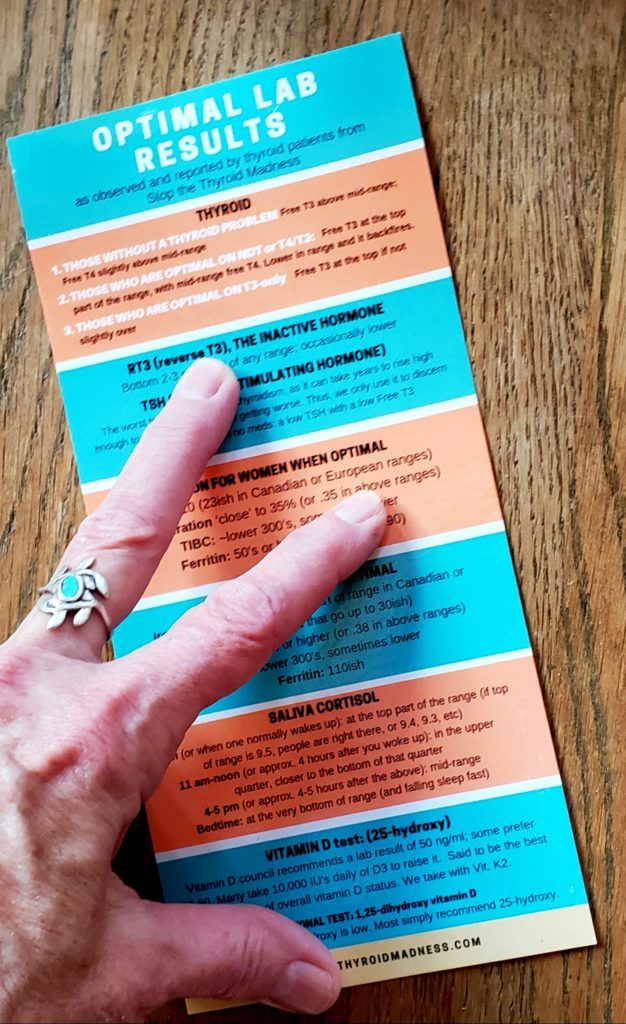
To use NDT, you HAVE to understand this page: https://stopthethyroidmadness.com/optimal Don’t just skim the latter page. Read it all. IMPORTANT NOTE: synthetic T4 with synthetic T3 does the job, too. But you need to study the optimal page, as well. Those who complain that any of the latter aren’t working usually are NOT going by the optimal page (even tho they claim they are).
Natural Desiccated Thyroid (NDT) is a hypothyroid treatment that has been around a long time (since the 1890s) and turns lives around, say patients who have used it. It’s often by prescription and is real thyroid i.e. made from dried and powdered thyroid from pigs (mixed from several pigs, not one).
NO, pigs are NOT slaughtered for their thyroids. That is bad information. They are slaughtered for FOOD. They just also happen to remove the thyroid for pharmaceutical purposes.
Pigs are close in compatibility to human cells, thus why it always worked so well, plus gives you what a healthy human thyroid would be giving as far as all the thyroid hormones. It has always met the stringent guidelines of the US Pharmacopeia, i.e made according to certain quality standards, contrary to what some doctors say.
PLEASE NOTE: this page as a whole comes under the DMCA or Digital Millennium Copyright Act, meaning this page is protected under copyright law. That means you are not welcome to copy this entire page, or even sections, or graphics, without asking for permission from Stop the Thyroid Madness LLC.
1) How long has natural desiccated thyroid been around?
Natural Thyroid began its debut by the late 1890’s. For very interesting information on its history & details on the product itself, see the updated revised STTM book with the blue gray cover, Chapter 2. There is also another chapter on NDT in the STTM II book by a doctor.
2) What’s always been the big deal about natural desiccated thyroid (NDT)?
Natural desiccated thyroid gives you exactly what your own thyroid would be giving you: T4, T3, T2, T1 and calcitonin. Thus, you aren’t totally dependent on conversion as you would be on T4-only–you’re getting some direct T3 in NDT. Patients report that as they move up on it from a starting dose of around 60mg, they notice improvement from depression, improved the immune system for Hashi’s patients, lowers high cholesterol, improve bone and heart health, removes T4-only-caused problems, on and on. READ Chapter Two of the updated revision STTM book for excellent details about NDT, those five hormones, and more. Patients also report that they want to become optimal to prevent symptom return, which means a free T3 towards the top numbers of the range and the free T4 midrange. Both.
***Even using the two synthetics for T4 and T3 has met success if one’s optimal dose is found, say a lot of patients.
3) What are the brands of desiccated natural thyroid? Is one better than the other?
NDT brands and fillers are all listed here. Everyone has had their favorite. But read about the sad changes that occurred in 2019 and 2020. You will also see different brands of T3 for those who take the T4/T3 route of treatment.
4) Can I take natural thyroid if I have autoimmune Hashimoto’s disease?
Definitely, say Hashi’s patients and their reports of its use. Most report using a good source of NDT like Armour, some compounded, and even T4/T3, and getting those free’s optimal, which we think also improves one’s immune system.
Get the patient-to-patient book Hashimoto’s: Taming the Beastto learn a great deal about Hashi’s, about triggers and what to do about them, about gut health, lots of research, and best of all, a great deal of patient experiences on how they put their Hashi’s into REMISSION!
5) If on T4-only, how have patients reported moving over to NDT or T4/T3?
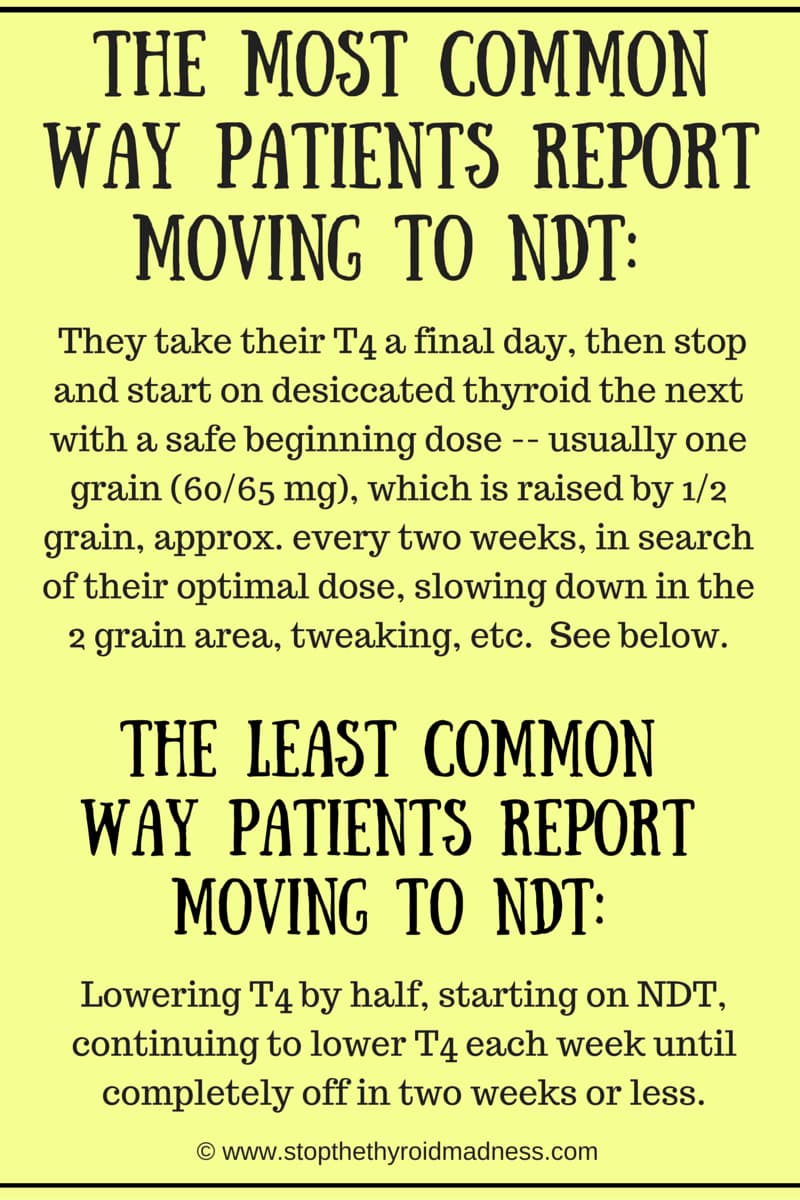
GRAPHIC SUMMARY:
If on T4 like Synthroid or Levothyroxine, a lot of patients have reported taking it a final day…
…then the next day, patients start on a working natural desiccated thyroid with a starting dose of one grain/60 mg.
Or if just adding T3 to the T4, patients lower the T4 a bit and add in approx 5 mcg T3 in 3 days or so. T3 is raised by the same amount until optimal. Doing labs is VERY important.
On prescription NDT, patients then raise by 1/2 grain every two weeks or so, as long as there are no negative symptoms due to a cortisol problem or low iron. On OTC ndt, it’s a guessing game, so labs are VERY important.
6) If not on any thyroid meds, what do patients report as a good starting dose of NDT?
When first starting out on a working NDT, one grain (60/65 mg) has been a safe “starting dose” for most, patients have reported. Then what is in the above graphic. Note that one grain of most NDT’s is 38 mcg T4 and 9 mcg T3. That will give a good idea of a close starting dose if also treating with synthetic T4 and synthetic T3. The latter work well, too.
7) What if one wants to move from T4-only, to adding T3 to that T4?
Generally, we as patients have lowered the T4 a bit for a few days (allowing the conversion to T3 to slow down), then we add in direct T3. Starting doses of T3 vary, but 5 mcg has proven by experiences to be safe for most, and dosing that 5 mcg twice a day (5 and 5) . Then raising by that much each week or so, and retesting the free T3 once taking a total of 25 mcg T3. Patients report tweaking based on what is explained on this page: https://stopthethyroidmadness.com/optimal
8) What is an optimal amount of NDT (or T4/T3) and what are common doses to achieve optimal?
For either, patients have reported being optimal when their free T3 is towards the top area of the range, and free T4 midrange. Thus why doing the free T3 and free T4 labs are important. What amount achieves optimal? It varies between individuals. If we stay lower than optimal, hypo symptoms have often returned, sooner or later. We call that the backfire from not achieving an optimal free T3.
9) But I feel great on non-optimal doses of NDT or T4/T3! Am I an exception to the optimal amounts?
Many people will feel better on the lower doses…at first. But it eventually backfires. Why? It’s not meeting the demands of your body over time. Thus, hypothyroid symptoms can return. The individuality is when.
10) Are patients taking NDT or T4/T3 only once a day?
Most patients have reported finding it beneficial to divide their dose to at least twice a day in order to spread the energy-giving affect of T3 when it’s most needed. An example is taking 2/3 of natural desiccated thyroid or T4/T3 in the morning, and the other 1/3 in the early afternoon. (Or if on T3 alone, more in the morning than in the second dose). And the theory was the fact that one’s own thyroid, if healthy, would have given you what you need throughout the day instead of one dump; thus, we replicate that when T3 is in our treatment.
11) What do patients notice when optimal on a working NDT or T4/T3 (#6 below is especially important)?
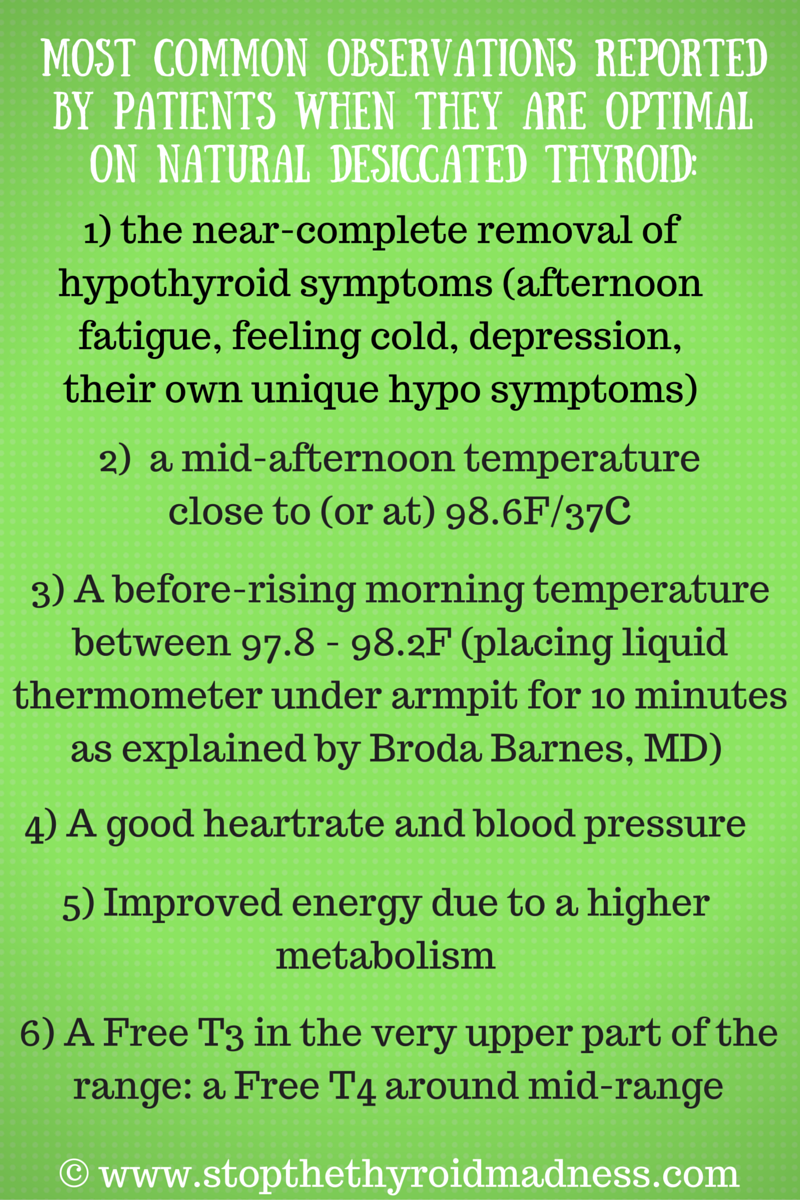
GRAPHIC SUMMARY: Patients report seeing these outcomes when they are optimal (along with optimal iron and cortisol:
the near complete removal of hypothyroid symptoms
a mid-afternoon temp of 98.6F or 37C
a before-rising morning temperature of 97.8-98.2F (as learned from Dr. Broda Barnes)
a good heartrate and blood pressure
improved energy because our metabolism is better
a free T3 in towards the top part of the range and a free T4 around mid-range. The latter labwork has been noticed frequently over the years when optimal. Yes, optimal seems to push the TSH lab result below range without a hint of hyper! i.e. though Graves disease results in a very low TSH, our low TSH isn’t the same, thus dispelling the fear-mongering by doctors that we will get bone loss or heart problems.
12) Why do I not see the TSH mentioned above?
Because patients discovered it’s more about the free T4 and free T3, not the TSH, which is a pituitary hormone. Also, when the optimal levels of the frees are reached, the TSH will fall below range. Doctors will often overreact to a TSH that low, so read this page.
13) My free T3 is optimal and at the top of the range, yet I feel horrible with symptoms, and my free T4 is lower in the range. Why?
Patients have discovered that T3 can reveal if they have either low cortisol, high cortisol, and/or low aldosterone. Cortisol is tested by saliva more accurately than blood. Aldosterone can be tested by blood. Patients report T3 reveals adrenal issues with hyper-like symptoms like higher heartrate, palps, anxiety, and those unique to the individual. Patients have also reported that the high FT3 with continued symptoms is a clue. We call it pooling, aka T3 going high in the blood and not making it to the cells due to stressed adrenals. So we move back down, do the saliva testing, then treat. Chapter 6 in the updated revision STTM book with the blue gray cover details what patients have learned. (Beware of scammers sending the older 2011 version with the red cover)
14) Can patients go by those Synthroid-to-NDT equivalency charts?
Not unless you want to stay hypothyroid, patients have reported over the years. You can’t compare the two at ALL.
15) Are there any non-prescription versions of desiccated thyroid products?
Yes. They are usually bovine and some are mentioned on this page. Even on the over-the-counter natural thyroid supplements, patients have reported its KEY to get optimal by watching the free T4 and free T3. i.e. they learned It’s NOT just about “how one feels”. Note that on these OTC brands, patients report some batches causing a return of hypo symptoms. So beware and might be a good idea to have a backup of Thyroid-S or other.
16) Do patients swallow, chew up, or do NDT or T3 sublinqually?
All work. But many have found that putting it under the tongue (sublingual method) seems to give a better punch, in spite of empty strong opinions that it can’t due to the molecules being too big. Even biting the tablet up into smaller chunks work. If you do swallow it, you’ll need to avoid taking iron, estrogen, calcium or high fiber as any of the latter can “partially” bind the thyroid hormones. If the tablet is quite hard due to excess cellulose, chewing it up can give better results, say some patients.
17) Why is the T3 so important in either NDT of T4/T3, or T3-alone?
From a defunct biology website, but still good information: In your cells, T3 is essential to reconverting ADP (the ‘flat battery’) into ATP (the ‘charged battery’). A shortage of T3 leads to a poor ratio between ATP and ADP. That would seem to explain why a long recovery period is needed after exertion; it takes a long time, at this deficient rate, to get back to a decent level of ATP so you’re ready for more activity.
18) How do I find a doctor who understands desiccated thyroid or T4/ T3 or T3-only?
Many doctors are very ignorant about it all. Others will prescribe, but hold you hostage to the TSH, or are afraid to go high enough to get your levels optimal. So be prepared to teach any doctor what you have learned from this page and the revised STTM book. Learn!! Study!!
19) I’ve read bad reviews about NDT. What are they talking about?
a) Most bad reviews were because those patients were underdosed and didn’t understand the bad results from that, or the NDT was revealing an iron or cortisol problem that can be treated. b) If the review was written in 2019 and 2020 especially, they are because NP Thyroid, Naturethroid, and WP Thyroid started causing patients all sorts of problems, then were recalled. Armour is an exception.
One can also be UNDERDOSED on either NDT or T3, which results in bad reactions over time. Study this page.
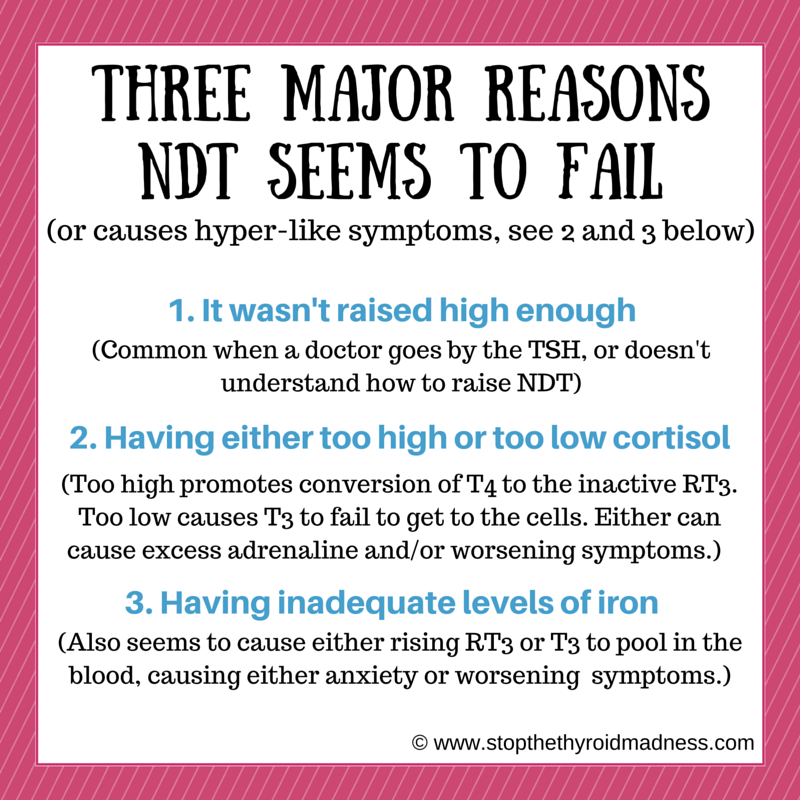
The below graphic also applies to taking T4/T3, or just T3.
SUMMARY OF GRAPHIC: 3 main reasons for problems when raising Natural Desiccated Thyroid, or T4/T3, as reported by patients:
They didn’t raise it high enough, thus a return of hypothyroid symptoms and even too much adrenaline
They have either too high or too low levels of cortisol. Saliva testing, not blood, is the way to find out accurately
OTHER LESS COMMON REASONS: allergy to fillers, allergy to porcine (they might also note that when eating bacon or ham), genetic mutations causing a conversion issue with T4.
20) Do I have to treat my adrenals before getting on or using NDT or T3?
Patients have noticed that even with a cortisol problem, as revealed by a saliva test, they can tolerate small amounts of a working NDT, T4/T3, or T3. But we still need to discover and treat the adrenal problem in order to raise and get optimal. Because if we raise Armour or T3 on top of having either low cortisol, high cortisol, or even having low aldosterone, we can have hyper-like symptoms such as higher heartrate, palps, anxiety, etc. We learned to go back down if that happens, and treat what a saliva test reveals.
An adrenal issue is why you need to read the updated revision STTM book. Chapters 5 and 6 go over it all. And the updated revision has many updates in those chapters.
21) Can I get on NDT or T4 if I already know I have a high Reverse T3 (RT3)?
We as patients learned the hard way that a very high RT3 is going to need mostly T3, plus to treat the causes of that high RT3. Read all about RT3 here. More in the updated revision STTM book.
22) Why do some patients take T3-only instead of desiccated thyroid or T4/T3?
a) If reverse T3 (RT3) is going up when raising NDT or having T4 with T3, patients with their doctors lower NDT or T4 and add in T3 to help lower RT3 while treating the cause. b) A minority may have a mutation in the DIO1 gene which can prevent conversion of T4 to T3. Doing genetic testing such as 23andme can help find that gene mutation.
23) If one is getting older, are they supposed to lower NDT or T3 a great deal? Or not use it?
That idea of lowering comes from a study done with those on T4-only and who appeared to be overdosing themselves with T4 and had more bone fractures. But with NDT or T3, the direct T3 has helped our bone strength, not make it worse. It’s possible if your activity level dropped, you might need slightly less NDT or T3 than one does at age 30. There is also a ridiculous idea by insurance companies that NDT is harmful for older folks. That has not proven to be true. It’s all about being OPTIMAL, no matter one’s age, we have noticed as patients.
24) Why does my doctor say NDT is “unstable”?
Doctors used to say this because they don’t know what they are talking about. T4-only had been recalled MANY times due to this issue. Today, sadly, we have seen many changes to all NDT brands which aren’t resulting in the consistent product we used to know. So the “unstable” designation now fits due to unknown changes by the pharmaceutical industry, but NOT due to the NDT itself. NDT itself has changed lives since the 1890’s.
25) What fillers, etc, are in Natural Desiccated Thyroid or T3?
To see ingredients of all, go here. To see all available options for desiccated thyroid, go here.
26) Any other tips?
Many patients are keen to having an emergency backup of desiccated natural thyroid or T3 just for that–emergencies! Desiccated thyroid and T3 have a long shelf life, but you can also wrap it securely to avoid damaging moisture and place it in the refrigerator door.
WANT TO COUNTER BAD INFORMATION OUT THERE? It’s extremely important to be informed. This is why I, Janie, wrote the updated revision STTM book. Read. Study!! Underline. Highlight. Bookmark. We have no choice to be informed to get well.
Want to order your own labwork?? STTM has created the right ones just for you to discuss with your doctor. Go here: https://sttm.mymedlab.com/
Need help interpreting your lab results? Go here: www.stopthethyroidmadness.com/lab-values/ Because patients have learned that lab results have nothing to do with just “falling anywhere in the normal range”.
Important notes: All the information on this website is copyrighted. STTM is an information-only site based on what many patients worldwide have reported in their treatment and wisdom over the years. This is not to be taken as personal medical advice, nor to replace a relationship with your doctor. By reading this information-only website, you take full responsibility for what you choose to do with the information on STTM or its outcomes. See the Disclaimer and Terms of Use.