* You are viewing Posts Tagged ‘book’

Why the party is over with Forest Pharmaceuticals, the makers of Armour

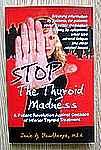
In 2002, when I first got on desic­ca­ted thy­roid and it abso­lu­tely chan­ged my life, it hap­pe­ned to be the brand name called Armour by Forest Phar­ma­ceu­ti­cals.  And I swoo­ned.  You could do it sublin­gually (even if it wasn’t made that way), and I prai­sed Armour for that. So did other patients after we spread the word on patient groups, on the STTM web­site and in the Stop the Thy­roid Mad­ness book.

My fond­ness for Armour did not take away my prai­ses for other presc­rip­tion brands, though, inc­lu­ding Natu­reth­roid or Westh­roid by RLC Labs.  I simply made a doe-eyed com­mit­ment to Armour for my per­so­nal treat­ment because you could do it sublin­gually. I have also used the name “Armour” interchan­geably to repre­sent all good desic­ca­ted thy­roid products.

But because of a suc­ces­sion of three events, I think it’s time to give back my going-steady ring.

The first blow to my romance with Armour cen­te­red around the extreme tight-lipped sec­recy from Forest when the refor­mu­la­tion of Armour began. We can sur­mise the trou­ble begin in 2007 when patients were fin­ding Armour in the lar­ger sizes to be sud­denly inef­fec­tive.  For the entire year of 2008, sup­plies were extre­mely limi­ted and only the one grain size or lower could be found, if at all.  Patients were worried and unhappy.  I even sup­por­ted Forest in my blog posts, assu­ring patients that everything would be fine.  But Forest said prac­ti­cally nothing. Why was and is Forest mum about why this was happening ?

The second blow to our courtship was the change to the “refor­mu­la­ted” Armour. Sud­denly, patients find that doing Armour sublin­gually was a thing of the past. Now all we get is a never-ending chalky pasty resi­due.  Addi­tio­nally, many patients have been repor­ting that the amount of Armour that once remo­ved all symp­toms, was now brin­ging them back.  Huh?? In spite of an appa­rent draw­back in some batches in 2007, why would Forest take an effec­tive pro­duct and change it?

And the third and final straw to my affair of the heart? I made a phone call to Forest using the same 800 num­ber you all can use. That was Tues­day, May 5th. My intent was to ask about the word anhy­drous which is now after the ingre­dient dex­trose in the Armour ingre­dients lis­ting. (It means that all mois­ture has been with­drawn, but I wan­ted to con­firm the details for the brands page.)  When I reached the repre­sen­ta­tive for Forest, and after she asked my name and I gave it (oops),  the tune of the con­ver­sa­tion chan­ged.  She said she could not ans­wer my ques­tion since I own a public web­site, and would have to inform the “Media group” from Forest, and they would call me back. When I asked when, the ans­wer was a vague as Synth­roid is in trea­ting hypothy­roi­dism i.e. she didn’t know. I even called back the next day to get the same drib­ble.   Why have repre­sen­ta­ti­ves on the Forest hot­line been ins­truc­ted not to ans­wer a sim­ple ques­tion from someone like myself,  and I still have not recei­ved a phone call from Forest?

Sob.  Yup, brea­king up is hard to do, but a gal can only take so much strange betra­yal, tight-lipped silence…and igno­ring a sim­ple ques­tion from someone who has done a LOT to put money in their poc­kets out of extreme gra­ti­tude. Besi­des, there’s another phar­ma­ceu­ti­cal cour­ting me at my door:  RLC Labs. Thank good­ness there are other fish in the sea.

Thank you, Jeffrey Dach, MD

img_0276 When I work up this mor­ning and later got on my com­pu­ter, I read an email which infor­med me that Dr.  Jef­frey Dach had revie­wed the Stop the Thy­roid Mad­ness book in a sur­prise article which came out today: www.opednews.com/articles/A-Review-of-Stop-the-Thyro-by-Jeffrey-Dach-090218 – 801.html

Yes, I write on the same site, yet had no idea he was going to do this…

You can also see my res­ponse to his review, on his blog, here: http://jeffreydach.com/2009/02/06/stop-the-thyroid-madness-by-jamie-bowthorpe.aspx#Comment

Hum­ble thanks, Dr. Dach.  With the sha­red expe­rien­ces of thou­sands of hypothy­roid patients around the world, I clim­bed a steep moun­tain to get that book out – a labor of love and the firm com­mit­ment to edu­cate patients because of a medi­cal com­mu­nity which has been kee­ping us sick.  Stop the Thy­roid Madness!

A real life horror movie: suckered by Big Pharma marketing. Part 2

(Want to be noti­fied of my blog posts? Curious what’s on my mind? Use Noti­fi­xious to be infor­med. Look on the bot­tom left of the links where you can sign up. )

Recently, after we watched a semi-scary movie about being suc­ke­red, a friend brought up my blog post of last July where I desc­ri­bed a terrifyingly-real horror movie. 

The plot: stun­ningly con­vince hun­dreds of millions of indi­vi­duals world­wide that what is obvious, isn’t. i.e. it’s all in your head, you are ade­qua­tely trea­ted on Synth­roid, Levoxyl, Eltro­xin, Nor­ton, et al,  and not only that, we’ll ban­daid your con­ti­nuing pro­blems with more medi­ca­tions.

A second plot: also com­ple­tely hood­wink those with top notch higher medi­cal edu­ca­tions and expe­rience by chur­ning out the the exact same poppy­cock, and reward their stu­pi­dity with gifts.

The cen­tral villian: Big Pharma, follo­wed by the doc­tors who bought the lie

Exactly a year ago this month, Science Daily came out with an article, citing two York Uni­ver­sity researchers who esti­ma­ted that the U.S. phar­ma­ceu­ti­cal industry spends almost twice as much on pro­mo­tion as it does on research and deve­lop­ment, con­trary to the industry’s claim. In other words, the researchers esti­ma­ted that $57.5 billion in US dollars was spent on phar­ma­ceu­ti­cal pro­mo­tion in 2004 – the year they were stud­ying. Yes, I said BILLION.

Brea­king that down, Big Pharma spent appro­xi­ma­tely $61,000 per phy­si­cian in pro­mo­tion of their pro­ducts.  And they conc­lu­ded that both figu­res were UNDE­Res­ti­ma­tes.  In other words, they conc­lu­ded that the US phar­ma­ceu­ti­cal industry is marketing-driven rather than “life-saving”.

And adding fuel to the fire: most doc­tors believe every thrust of that mar­ke­ting. I recently par­ti­ci­pa­ted in com­ments with other won­der­ful patients in res­ponse to a DO/Endocrinologist, Dr. Tho­mas Repas, who has clearly bought the Big Pharma mar­ke­ting when it comes to levothy­ro­xine. You can read his posts and our com­ments here, here, and here.   Dr. Repas is exactly the kind of doc­tor who has  sta­rred in our horror movie, and the kind of doc­tor that patients have lamen­ted about for years.  Read the  Give Me a Break list of com­ments made by doc­tors, as well as further com­ments on the January 1st blog.

But Dr. Repas is in good com­pany. Doc­tors have belie­ved the Big Pharma lie about T4-only medi­ca­tions, and against desic­ca­ted thy­roid like Armour, Natu­reth­roid, etc. for 50 years.  In the patient-to-patient  Stop the Thy­roid Mad­ness book, you can read about the first table­ting of Synth­roid in 1955 and the stra­te­gic and suc­cess­ful pro­mo­tion of T4-only, in spite of the fact that T4 was known to be uns­ta­ble for decades.

And today, more than 50 years later, very few of us have been untouched by the Big Pharma push for levothy­ro­xine T4-only treat­ment.  My own mother was suc­ke­red, and I was suc­ke­red.  And until patients star­ted to make a huge push for desic­ca­ted thy­roid treat­ment the last few years, nearly every sin­gle doc­tor around the world had been suckered.

We still have a way to go. But we’ll get there, bit by bit.

Doctors still have a long way to go a.k.a. Those symptoms might just be the thyroid!

Just as I was finishing up the post below about a short sum­mary on the Endoc­ri­no­logy Today web­site, I saw a link at the bot­tom of the page that inte­res­ted me.  It took me to a blog post on the same site from Decem­ber 10th tit­led “Why can’t it be my thyroid?”.

And a slew of thy­roid patients around the world, as well as a gro­wing body of doc­tors,  would com­ple­tely disa­gree with this post.

Namely, a DO explains the pro­blem of patients arri­ving in doc­tors offi­ces with “innu­me­ra­ble pos­si­ble symp­toms of hypothy­roi­dism” inc­lu­ding “fati­gue, cold into­le­rance, dec­rea­sed energy, weight gain, depres­sion, hair loss, low libido, mens­trual irre­gu­la­rity and others.”

Yet, he bemoans, these patients have a “nor­mal TSH” which is “well within the nor­mal labo­ra­tory refe­rence range.” He also refers to their nor­mal free T3 and free T4, and sta­tes there is no his­tory to sug­gest pitui­tary dys­func­tion or that the TSH is unreliable.” 

He then pro­ceeds to pat him­self on the back because he 1) will treat some patients with a high-normal TSH and other cli­ni­cal fea­tu­res,  2) he will treat to a low-normal TSH of less than 2.0, but like the good-boy-doctor, “still within the nor­mal labo­ra­tory refe­rence range” and 3) he will not induce iatro­ge­nic hyperthy­roi­dism, even if symp­toms per­sist. (yikes)

“Iatro­ge­nic hyperthy­roi­dism”??  Since “iatro­ge­ne­sis” refers to harm­ful medi­cal pro­ce­du­res, he’s pro­bably refe­rring to a TSH below the range, which in his mind, equa­tes to hyperthyroidism.

***Then comes the obser­va­tion that has made many thy­roid patients shi­ver, since so many doc­tors have said it: because he feels that adding T3 to T4 has more nega­tive results than posi­tive, he explains to his patients that there may be cau­ses of their symp­toms besi­des the thyroid.”

THUD.

So here is my 6-point res­ponse to any doc­tor who might share these beliefs: 

1) There’s hardly a thy­roid patient around who hasn’t had a so-called “nor­mal” TSH in spite of clear and obvious hypothy­roi­dism.  The TSH lab test fre­quently lags behind what is rea­lity in the body, and has been doing so since it’s crea­tion in the early 1970’s (see Chap­ter 4 in the Stop the Thy­roid Mad­ness book for his­tory).

2) Having a “nor­mal” free T3 and free T4 means nothing. It’s “where” the result falls in that range that means something. i.e. patients all around the world are noti­cing that having a free T3 mid-range or lower in the pre­sence of hypothy­roid symp­toms is usually a BINGO lab result poin­ting to hypothyroidism.

3) Exactly because doc­tors tend to dis­miss clear hypothy­roid symp­toms as “something else” thanks to a lousy TSH refe­rence range, a bur­geo­ning num­ber of thy­roid patients are falling into adre­nal fati­gue with its low cor­ti­sol, which ser­ves to mess them up even more.

4) A huge body of thy­roid patients who are on desic­ca­ted thy­roid hor­mo­nes (aka Armour, Natu­reth­roid, etc), and who finally have a com­plete remo­val of symp­toms with a nor­mal tem­pe­ra­ture and hear­trate, also have a sup­pres­sed TSH lab result, and not one iota of “iatro­ge­nic hyperthyroidism.”

5) When it appears that adding T3 to T4 is having nega­tive effects, the pro­blem is most likely adre­nal fati­gue that needs correc­tion, and/or low ferri­tin, NOT deci­ding that the symp­toms must be from another cause or T3 doesn’t work.

6) “Fati­gue, cold into­le­rance, dec­rea­sed energy, weight gain, depres­sion, hair loss, low libido, mens­trual irre­gu­la­rity and others” may be sha­red in other con­di­tions, but you are most likely mis­sing CLEAR symp­toms of hypothy­roi­dism, both in the undiag­no­sed patient with a so-called nor­mal TSH, or with a patient trea­ted with the lousy thy­ro­xine, which lea­ves most ever­yone with con­ti­nuing hypothy­roid symp­toms.

“I’m sorry. It IS your thy­roid” is exactly what patients need to hear.

Puff. Puff. Puff. If you are a cigarette smoker & hypothyroid, you might want to read this!

Who, as a smo­ker, hasn’t heard how dele­te­rious tobacco smo­king is for your health. Not only will you acquire health pro­blems directly rela­ted to smo­king, but your life is shor­te­ned by 10 – 15 years ave­rage accor­ding to sta­tis­tics. My own father died at age 63 directly rela­ted to his smoking.

But in spite of strong rea­sons to quit, most smo­kers will tell you it’s NOT easy. Why? Because the nico­tine in tobacco is the addic­tive bogey­man. Nico­tine sti­mu­la­tes those plea­sure cen­ters in your brain, besi­des being a subs­tance which “gets you going” by relea­sing both blood sugar and adre­na­line. The Ame­ri­can Heart Asso­cia­tion sta­tes that “Nico­tine addic­tion has his­to­ri­cally been one of the har­dest addic­tions to break.”

But for hypothy­roid patients, tobacco smo­king pre­sents another whammy.
Namely, it stres­ses your adre­nals over and over. And with adre­nal fati­gue being a com­mon side effect of trea­ting hypo with T4 meds like Synth­roid, Levoxyl, Eltro­xin, et all, as well as being dosed by the lousy TSH, you’ve got a third rea­son to fall into adre­nal fati­gue if you are a smoker.

Addi­tio­nally, another fac­tor in the dif­fi­culty of quit­ting is that cor­ti­sol dec­rea­ses when you try to quit. A 2006 research report found that the lowe­red cor­ti­sol after quit­ting is asso­cia­ted with smo­king relapse and with reports of inc­rea­sed with­dra­wal seve­rity and dis­tress. So, when you already have adre­nal fati­gue, and you quit smo­king – a dou­ble whammy against being successful.

What’s the solu­tion? If you don’t have adre­nal fati­gue and want to quit, it may be wise to have a good adre­nal sup­port on hand, such as Iso­cort or any qua­lity OTC adre­nal pro­duct at your health food store. If you DO have adre­nal fati­gue, sta­ying away from cigs may require adding addi­tio­nal cor­ti­sol to your daily amount. Chap­ters 5 and 6 in the STTM book have good infor­ma­tion to help you with cor­ti­sol support.

Are you a smo­ker with hypo? Don’t hesi­tate to res­pond to this post with your expe­rience. (Please note that replies are not for questions.)

READ DEBORAH’S STORY ABOUT HER ATTEMPT to STOP SMOKING.