Find out more here!
Hide me

Thyroid Tidbits: Men with low iron, Reverse T4 (yes, I said it correctly), Inflammation in thyroid patients, plus more

(No, the tatoo isn’t mine. It belongs to a gal who says STTM helped changed her life. Amazing and brave! :) )

MEN CAN HAVE LOW IRON, TOO:

I’ve seen a few hypothyroid men who have found themselves with low iron. In fact, either iron anemia is growing in men, or we’re just hearing from them more thanks to the internet.

And remarkably, it has become personal for me. Turns out my own husband is very low, which explains the fatigue he had been experiencing lately. Sadly, taking iron pills give him a headache, so he will eat high-iron foods daily, and will be exploring Floradix, a liquid herb-based iron. Men, get all the needed iron labs!

REVERSE T4 (yes, I said it correctly)

I’ve been having an email chat with a scientifically-minded guy named Brian who also has a sister with a major in bio-chemistry. And something dawned on both of them concerning “levothyroxine” which is the synthetic term for T4.  The prefix LEVO means the ”left-hand” version of a molecule, and thyroxine is the biological term for the real T4.  Says Brian: “Levo-thyroxine means it has exactly the same atoms in exactly the same order, but not the same shape (handedness), so if enzymes or proteins have to chemically “fit” it to work, they may not be able to. He concludes this can be one reason being on synthetic T4-only does not work, and knew it was alluded to by Dr. Mark Starr.

But Brian continues: In just the same way that levothyroxine is the mirror-image or “left-handed” version of regular thyroxin, RT3, or Reverse T3, is the mirror-image or “left-handed” version of T3.  If we were consistent with our terminology, in other words, levothyroxine would be known as “Reverse T4″. Says Brian, just as Reverse T3 is biologically inactive , so is Levothyroxine, thus “Reverse T4″. I love it!

CHECK OUT WHAT THIS MEDICAL TRANSCRIPTIONIST SAID:

In a facebook discussion,  a female medical transcriptions has had a realization. Namely, in almost every report she is transcribing into text or digital format,  a patient with the diagnosis of hypothyroidism also has a medical history of depression and/or anxiety. You can read about depression & anxiety here. Of course, no patient who is informed is surprised! They are HYPOTHYROID symptoms.  And she then notes the prescription ordered by the doc: Synthroid.  WAKE UP DOCTORS. You are only dooming your patients to a lifetime of depression, anxiety and far more.

WHY MANY OF YOU HAVE INFLAMMATION (and don’t even know it), WHAT IT DOES, AND HOW TO TREAT IT

One thing I see a lot when doing phone consultations, as well as on thyroid patient groups, is evidence that someone has low-grade inflammation. In fact,  research has already shown that a large body of folks with hypothyroidism have higher levels of CRP (C-Reactive Protein) which is a lab test marker of inflammation.  That inflammation, in turn, puts you at a higher risk of heart disease.

Another clue that you have an inflammation problem is having higher ferritin levels (i.e. ferritin looks great, or is too high) along with poor iron serum/% saturation lab results.  In other words, in the presence of chronic inflammation, your iron will be diverted to your ferritin iron storage, and less will be in your serum and saturation.  You can also find yourself with very low TIBC (Total iron-binding capacity). The TIBC is measuring the protein “transferrin”, made in your liver, and which transports your iron through your body. If this is the case, you can’t take high levels of iron supplementation, as explained on the above ferrritin page and more in the book.

What do you do? 1) Treat your hypothyroidism properly–a huge step in lowering that inflammation–with desiccated thyroid, NOT Synthroid. (Read the Things We Have Learned page on STTM, or even more details in Chapter 3 in the new Revised STTM book). 2) Treat proven low cortisol with HC or hydrocortisone. If saliva cortisol tests (Don’t guess! Do a saliva test!) reveal you have adrenal dysfunction, cortisol supplementation will help counter inflammation.   (Read the Adrenal Info and How to Treat page on STTM, or more details in Chapter 6 in the new Revised STTM book.) 3) Use Krill Oil as a supplement. Krill Oil is an even better marine fish oil with rich amounts of Omega 3 fatty oils,  and research with even a low dose of 300 mg proves that it does a bang-up job in reducing inflammation as well as pain in joints associated with rheumatoid and osteoarthritis.  My own husband is on 1000 mg a day.

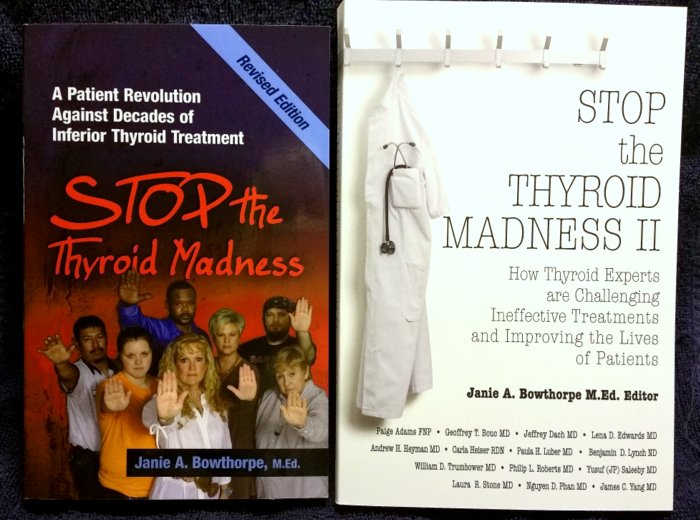
HAVE THE REVISED SECOND EDITION OF THE STTM BOOK YET? IT’S WORTH IT.

I am frankly extremely proud of the Revised Second Edition of the STTM book.  In spite of being a lot of hard work, it is good to see all the additions, details and corrections throughout the entire book.  There is much more on labs and how to read them, ferritin and iron, adrenal dysfunction and how to treat it, reverse T3 and how to treat it, plus a completely new chapter on good supplements and foods.  I added a little more hidden humor, which was fun.  There are now 36 more pages, too, and at the same price.  You can see more about the book here.  The book is ideal since you can bring that right into the doctor’s office with the information highlighted and bookmarked. As far as Kindle or other readers, yes, I’m already aware that some of you have requested it. But right now, it’s the book only.  But I’ll make announcements in the future as to what might be coming up.

P.S. Seeing this blog post via the email notification? If you have a comment to make, click on the title, which will take you directly to this blog post on the net, and comment there.


  • Hip hip!! STTM has new products to help spread the word, here. Great BUMPER STICKERS, too, here. Spread the word--YOU may make a difference in someone’s life.
  • Check out the NEW REVISED patient-to-patient book with even more detail (and which doctors seem to respect more than websites).
  • Need to understand all your best options for thy­roid treat­ment? Go here.
  • Want to keep track of these "fringe website" blog posts? ;-) Curious what’s on Janie’s mind? Use the Blog Notification on the lower left of the links. or use an RSS Feed.

Finally! The 2011 REVISED SECOND EDITION of the Stop the Thyroid Madness book!

YEEHAW!!

Three years ago this month, the book Stop the Thyroid Madness: A Patient Revolution Against Decades of Inferior Treatment came out with quiet fanfare–a complete patient-to-patient book chock full of information based on the successful experience of thyroid patients worldwide.  As the messenger of that information, I had a strong purpose: to create INFORMED patients who can then demand change in their doctors offices. Pro-active patients!  Educated patients!

But the reaction to it wasn’t quiet!

Thyroid patients have reported it was changing their lives.  To date, the STTM book has been sent, and in multiple copies, to Antiqua/ Barbuda, Austria, Australia, Belgium, Canada, Cyprus, Denmark, Finland, France, Germany, Iceland, Ireland, Israel, Malaysia, New Zealand, Netherlands,  Norway, Singapore, South Africa, Spain, Sweden, Switzerland, Thailand, and the UK. That doesn’t include the high volume amount of copies sent to US patients, doctors, and individuals in all 50 states and Puerto Rico.

Amazingly, yet not surprisingly, patients were discovering new information even a few months after the First Edition was published three years ago.  As a result, Laughing Grape Publishing LLC had to add, and continually update, a bookmark of updated information into all its books ordered directly from the publishing company.

Today, in the REVISED SECOND EDITION, all that extra patient information has been added, plus a LOT more.

  • 36 more pages, by and for patients, plus changes & additions in every single chapter
  • Much more detail on adrenal and HPA dysfunction and how to treat it
  • Recognizing and dealing with Reverse T3
  • Identifying and treating gluten issues as related to Hashimotos disease
  • Iodine-use information in relation to hypothyroid, breast disease, Hashimotos, adrenal dysfunction, etc.
  • More details on labwork preparation, plus what to look for in your results
  • Why you need more than ferritin testing, and details on iron testing
  • Updated information on brands of desiccated thyroid throughout the world, T3-only products, hydrocortisone, and more
  • A completely NEW CHAPTER on supplements & foods which thyroid patients appreciate and use!

And, the price has been kept exactly the same.  Our loss; your gain, in the name of an important movement of needed education and change!

This was NOT an easy book to revise!  I had to go through it with a fine-toothed comb, removing some information, correcting other information, adding a lot more…besides working on making it more readable. I am not a writer by profession. Sometimes I felt like a “cuckoo’s nest mental case”  trying to balance the work on the Revised edition with my other activist responsibilities and a busy private life.  Is it perfect?  Nope.  But as I stated in the First, some information is right on target, some is at least close to the bulls-eye, and other info will fall into place as we continue to learn. That’s why you need to see it as “guide” of patient experience, and to use it to become PROACTIVE in your relationship with your doctor and the entire medical profession.

Today, you can order either copy. As of today, the First Edition has been lowered to 14.95 until supplies run out, which will be soon. The Revised Second Edition is taking pre-orders, and it looks like books will start being sent out in about 7-10 days.

You can go here to see a stand-alone website about the book, as well as here to be among the first to pre-order your copy.

THE STTM BOOK IN OTHER LANGUAGES

Yes, you will eventually be seeing the Revised Second Edition in various languages. That’s in the works right now, and no, I don’t yet know the dates. I’ll announce that here, so be sure and be signed up for this BLOG NOTIFICATION to the left under the links.

KINDLE and E-BOOKS

With no projected dates other than much later this year, you will first see an E-book. Later, we’ll be looking at Kindle. Again, announcements will be made, and you’ll have to be patient.  In the meantime, ordering the book is your best choice right now. Besides, having this book in your lap in the doctor’s office is powerful to many of them, since doctors can have silly thoughts about “internet” information.

And more is coming which will be announced as they occur. :)


  • Hip hip!! STTM has new products to help spread the word, here. Great BUMPER STICKERS, too, here. Spread the word--YOU may make a difference in someone’s life.
  • Check out the NEW REVISED patient-to-patient book with even more detail (and which doctors seem to respect more than websites).
  • Need to understand all your best options for thy­roid treat­ment? Go here.
  • Want to keep track of these "fringe website" blog posts? ;-) Curious what’s on Janie’s mind? Use the Blog Notification on the lower left of the links. or use an RSS Feed.

Why do some patients escape adrenal dysfunction?? I think I know why I did.

Anyone who has read my story of nearly 20 years of absolute misery on T4-only meds would think I’d be right in the thick of adrenal fatigue / HPA dysfunction and low cortisol.  Those were horrible, miserable, stressful, debilitating years.

Yet, I escaped it.

For awhile after I entered the thyroid patient activist field, I felt guilty. That was especially true as I saw how terribly people suffer with low cortisol.  But I also realized there was something potentially amazing to be discovered as to WHY I escaped it.

But years went by, and I have always been extremely busy as an activist: daily emails to take care of; constant updates to the website, keeping track of Yahoo and Facebook groups; thinking about and writing the blog; activities around the book, phone consultations, and so much more.  I have also fought to have an important private life.

So, it wasn’t until recently that I readdressed this question: why did I escape adrenal dysfunction? Was it genes which gave me strong adrenals?? That thought has drifted through my mind many times.  But I wasn’t sure. So recently, I took some time to really search my past to find answers. And something else really stood out.

Namely, because I had always been a fitness and health buff, I was big into supplements. Sure, I was unable to do hardly anything about fitness part of the equation–my T4-induced and crippling dysautonomia killed that.  But my belief in supplements never ended.   That was impressed into me by my mother who always stressed taking a vitamin pill as a child.  I also remember her putting my cigarette-smoking Dad on Vitamin C  in the 1970′s, having read it might delay his inevitable lung cancer. (It was too late.)

So when I became a young adult, married with little children, I learned even more about supplements, and took them. And one thing I remember always taking all those years as a young adult was high amounts of Vitamin C.  High amounts of Vitamin C!! That stood out to me.  And below are facts about Vitamin C and adrenals:

VITAMIN C and ADRENALS:

  1. “Of all the vitamins and minerals involved in adrenal metabolism, vitamin-C is probably the most important. It is essential to the adrenal hormone cascade and manufacture of adrenal steroid hormones.  It acts as an antioxidant within the adrenal cortex.” ~ www.bluemountainrx.com/adrenal.htm
  2. “While the adrenal glands need numerous nutrients to function normally, perhaps the most important of them all is vitamin C. The highest concentrations of vitamin C reside in the eyes, brain and adrenal glands. ~ http://www.adrenalfatiguefocus.org/adrenal-fatigue-and-vitamin-c.html
  3. “Healthy adrenal function requires vitamin C, and some of the highest concentrations of vitamin C in the whole body are found in the adrenal glands.” ~ http://www.naturalnews.com/029842_vitamin_C_adrenals.html
  4. “Vitamin C is utilized by the adrenal glands in the production of all of the adrenal hormones, most notably cortisol. When you are faced with a stressful situation, your vitamin C is rapidly used up in the production of cortisol and related stress-response hormones.” ~ http://www.adrenalfatiguerecovery.com/vitamin-c.html
  5. “The adrenal gland is among the organs with the highest concentration of vitamin C in the body. Interestingly, both the adrenal cortex and the medulla accumulate such high levels of ascorbate. Ascorbic acid is a cofactor required both in catecholamine biosynthesis and in adrenal steroidogenesis.” ~ http://www.ncbi.nlm.nih.gov/pubmed/15666839

There is much more on the net than the above, as well. And in fact, the important relationship between Vitamin C and your adrenals was proposed in 1951. This was huge, to me, as to why I may have escaped adrenal dysfunction. Even the use of B-vitamins and magnesium are important, tho I don’t remember what I was taking of those.

ANOTHER CLUE: I had a conversation with a gal recently. Like me, she suffered a long time, yet did not fall into adrenal fatique. I asked her why she felt she escaped it. She explained that she had worked for a naturopath for many years, and thus, took many supplements, including high dose Vitamin C. I was dumbfounded.

MY CONCLUSION: Whether I have found the irrefutable reason as to why I didn’t fall into adrenal fatigue and low cortisol may not be answered inconclusively. And who knows if some of us just have genetically strong adrenals.  But I lean to believe that my early use of high-dose Vitamin C all those miserable years may have been a huge factor, along with B-vitamins which can also be depleted. Today, I take a minimum of 2350 mg daily via my buffered C powder, and in water, and usually double that amount, as I like taking it before bedtime for the magnesium.  I am also a fanatic about adding squeezed lemon to my water or occasional fluoride-laden iced tea.

WHAT THIS MEANS FOR YOU: Adrenal patient experience has shown that once your adrenals or HPA function drops, as does your cortisol, the use of hydrocortisone is usually the best way to treat it.  See the adrenals page here.  And patients have learned in leaps and bounds on how to use HC with their open-minded doctors (…if they can even find a doctor who looks beyond his dogmatic training.  It’s not easy.)  But the use of high dose Vitamin C might not be something you want to ignore, whether you have to use HC or not:

  1. “Sufferers of adrenal fatigue are hit particularly hard by vitamin C deficiency. The production of cortisol and other adrenal hormones, characteristically low in this disorder, is dependent on an ongoing supply of vitamin C. If this supply dwindles, so too does the secretion of adrenal hormones. This feeble response from the adrenal glands places the body under further stress, further increasing demand for the vitamin C. The importance of intervention with the appropriate amounts of this nutrient should not be overlooked.”   ~ http://www.adrenalfatiguefocus.org/adrenal-fatigue-and-vitamin-c.html
  2. Have you heard of Scurvy? This is a progressive disease from the  deficiency of vitamin C that ultimately leads to death.  And Linus Pauling wrote in his 1979 book, Biomolecular Sciences,  that death from Scurvy is actually “adrenalcortical failure”. That is profound as to the importance of Vitamin C with YOUR adrenal health and/or recovery.
  3. “In two separate studies about vitamin C supplementation (1,000–1,500 mg per day for one week), ultramarathon runners showed a 30 percent lower cortisol level in their blood when compared to runners receiving a placebo. In another study of healthy children undergoing treatment with synthetic corticosteroids, 1 gram (1,000 mg) of vitamin C, consumed three times a day for five days, resulted in significantly lower cortisol levels compared to healthy children given a placebo. In a study of lung-cancer patients, a dose of 2 grams of vitamin C, given daily for one week prior to surgery, was able to bring elevated cortisol levels (resulting from the surgery) back to normal ranges in a significantly shorter period of time compared to patients receiving a placebo. ~ http://cortisolconnection.com/ch8_3.php

What about you? If you escaped adrenal dysfunction while going through years of misery on T4-only meds, or being held hostage to the lousy TSH lab result, why do YOU think you escaped it?

************************

* IODINE: Finally, I have updated the iodine page on STTM–long overdue.  Thanks to VRP for pointing out that their links have changed.  You can read many different links about iodine, the controversies and more, and decide for yourself what is right for you.

* FINDING A  BETTER DOCTOR: Want to try to find a better doc that the vast majority of cows…oops, doctors? Go here.

* TALK TO OTHERS: Talking to other patients is what started me on new path years ago. You can too, here. Scroll down to view them all.


  • Hip hip!! STTM has new products to help spread the word, here. Great BUMPER STICKERS, too, here. Spread the word--YOU may make a difference in someone’s life.
  • Check out the NEW REVISED patient-to-patient book with even more detail (and which doctors seem to respect more than websites).
  • Need to understand all your best options for thy­roid treat­ment? Go here.
  • Want to keep track of these "fringe website" blog posts? ;-) Curious what’s on Janie’s mind? Use the Blog Notification on the lower left of the links. or use an RSS Feed.

More on Acella desiccated thyroid….plus RT3 ratio calculator fine tuned!

Yesterday, I had a friendly and informative conversation with Philip Vogt, the President of Acella Pharmaceuticals, and Ellen Gettenberg, Director of Marketing.   Acella is the company which brought out a generic form of desiccated thyroid, and which first caught the eye of thyroid patients in November, 2010.  And I want to pass onto you what I learned:

Acella is different: Acella Pharmaceutical is not like the gigantic pharms we often hear about. Instead, they attempt to target the under-served markets, producing medications for particular niches of treatment, or those which are low-profile medications.  They also seek to produce lower-priced competitive versions of certain medications while keeping the quality.

How they make their version of desiccated thyroid: When it specifically comes to its desiccated thyroid, they go by older version “recipes” – using more dextrose (sugar) and less methylcellulose.  But in their case, the tablets are stated to contain NO cellulose.  That is actually good.  Their tablets are also not as hard-pressed as Armour seems to be now. I’d love to hear from folks who’ve been on Acella if they have tried to it sublingually, and what the results were.

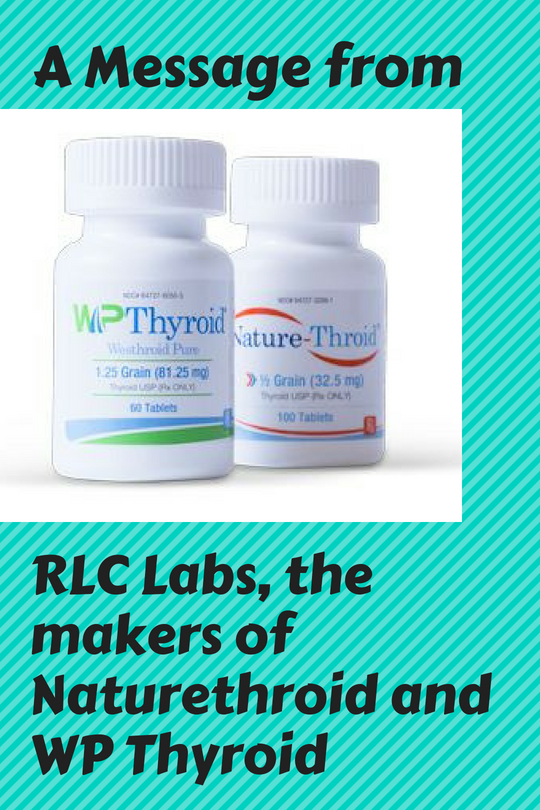
The ingredients: Acella does a 65 mg tablet.  The desiccated thyroid is speculated to come from the same manufactured source as do Armour and Naturethroid. Each 65 mg grain contains 38 mg T4 and 9 mcg T3 (plus unmeasured amounts of T2, T1 and calcitonin). The inactive ingredients are calcium stearate, dextrose monohydrate, maltodextrin and mineral oil.

************************

ABOUT THE RT3 ONLINE CALCULATOR on STTM: My brainy techs have added three more combinations to the calculator, so it is now ready-to-go to help you figure out your ratio: http://www.stopthethyroidmadness.com/rt3-ratio So far, the feedback is very positive and we have seemed to remove all kinks. REMEMBER: you need to put your Free T3/total T3 in first, then all the measurements will appear for the RT3.

WHEN TESTING YOUR THYROID LEVELS: remember NOT to take your desiccated thyroid, or your T3-only, before labs. The T3 rises consistently after you take it, giving you false-high reading and freaking your clueless doctor out.  **Picture doctor, eyes bugged out like a giant wasp, looking at lab result** With desiccated thyroid, the T3 will peak in approx. 2 hours; with T3-only, it can take approx 4 hours to peak.  Recommend labwork found here.

NEED A GOOD PATIENT GROUP OR ONE-ON-ONE CONSULTATION? Go here.  Of course, the groups are free and can be very helpful. Or, you can choose a paid consultation with Janie, which seems to be extremely helpful for those who want more immediate feedback and help.

TYPICAL QUESTIONS AND ANSWERS about thyroid, treatment, more issues:  www.stopthethyroidmadness.com/common-questions-answers


  • Hip hip!! STTM has new products to help spread the word, here. Great BUMPER STICKERS, too, here. Spread the word--YOU may make a difference in someone’s life.
  • Check out the NEW REVISED patient-to-patient book with even more detail (and which doctors seem to respect more than websites).
  • Need to understand all your best options for thy­roid treat­ment? Go here.
  • Want to keep track of these "fringe website" blog posts? ;-) Curious what’s on Janie’s mind? Use the Blog Notification on the lower left of the links. or use an RSS Feed.

Isocort has been changed, plus a new STTM on-line RT3 ratio calculator

If you haven’t heard the latest, Isocort, an over-the-counter adrenal support product that has been favored by adrenally-challenged patients with minor to moderate adrenal problems,  as well as favored by their forward-thinking doctors, has been reformulated.

Now for thyroid patients who loved Armour, “reformulated” is a nasty word.  Armour lowered its sucrose, raised its cellulose, and most patients who had been on it successfully for years reported a return of symptoms.  The partial solution has been to chew it up before swallowing.

But with IsoCort, the change “may” still be workable. All the following is right on the Isocort page on STTM. As we get more information on it, I’ll be adding to it:

IsoCort has changed! As of early 2011, Bezwecken changed the product from a bovine adrenal cortex to  a fermented plant-derived cortisol, joining over 100 other chemical substances which are plant derived.

Why has Isocort always been popular with thyroid/adrenal patients? For years, patients favored Isocort because unlike so many other adrenal support products on the over-the-counter market, it was made solely from the adrenal cortex, i.e from New Zealand sheep. That is an important distinction since the cortex only contains cortisol as compared to whole adrenal glandular products which contain both cortisol and adrenaline (epinephrine). And giving yourself more adrenaline was the last thing you would want as an adrenally-challenged, low cortisol individual.  Dysfunctional adrenals already cause the production of too much adrenaline as it is, resulting in anxiety, an increased heartrate and further stress on your already-stressed adrenals.

Will this change to plant derived affect the way Isocort works in me? Hopefully not.  As before, it only contains cortisol and avoids the unneeded adrenaline that you get from “adrenal glandulars”.

What’s in the newly-reformulated IsoCort? Besides the cortisol,  Isocort still contains Echinacea, as Echinacea Purpurea (6 mg per pellet). It also contains Lactose, Magnesium Stearate, Starch Arrowroot, Maltodextrin, Microcrystalline Cellulose, Magnesium Silicate, and Lactase.

Previously, it was listed as follows:  Freeze-Dried Adrenal Cortex (soluble fractionation) from New Zealand Sheep. Echinacea Extract (trace amount). Prunus and Lomatium dissectum root isolate (kreb concentrate-2%) in pellet base of lactose and lactase.

In other words, it still contains lactose and lactase, but the rest you see are new.

Why did they change the bovine adrenal cortex to plant derived cortisol? For one, the change now makes the product vegetarian-friendly. And it now joins a group of over 100 plant-derived substances made out there which are effective.

Can you tell me more about it being plant derived? Medicinal plants have always contained substances that are helpful for humans. Aspirin is one good example, made from willow or other salicylate-rich plants. In fact, there are so many medicinal plants out there that we haven’t even begun to touch the surface of using them! China is an exception, having used plants for thousands of years. It’s said that the practice of  ayurvedic in Asia uses nearly 2000 different kinds of plant species.  The Botanical Garden of the National Autonomous University of Mexico has stated there are approximately 3,500 species of medicinal plants in Mexico alone.  And more and more cancer drugs are going to be plant-derived.

How do patients use IsoCort? When after doing a 24 hour saliva cortisol test, it’s discovered there are some low cortisol readings, the use of Isocort gives back the cortisol that  the sluggish adrenal/HPA function is not giving.  You can read more about dysfunctional adrenal function here.  After reading that page, you’ll see a link on what patients have learned in treating it, plus references to other websites and patient groups.

Are there any other OTC adrenal cortex products out there? Yes. If you will use your favorite search engine and put in “adrenal cortex supplements”, you’ll find other sources. Just read the labels correctly to make sure it’s only adrenal cortex.

* To read four facts about plant-derived medications, go here.
* To read why you may need cortisol, go here.
* For good patient groups, go here.

**********************************

FREE T3/REVERSE T3 ON-LINE CALCULATOR ADDED TO STTM

Not doing well as you raise your desiccated thyroid as compared to others? Have dysfunctional adrenals or low ferritin/low iron?? You may be making far too much Reverse T3 (RT3), which clogs cell receptors and prevents regular T3 from getting to your cells. And the best way to find out is to understand the RATIO BETWEEN YOUR FREE T3 and REVERSE T3.

But figuring out that ratio may be daunting for some who hate math. So to counter that problem, STTM now has a page where you can plug in your two lab results and the measurements and get your ratio number:  http://www.stopthethyroidmadness.com/rt3-ratio Please note that there are currently three combinations that are not in there, but are being worked on as I write this by STTM’s brainy techs. Hopefully by next week, you’ll see all of the possible combinations!

To read more about Reverse T3, go here.


  • Hip hip!! STTM has new products to help spread the word, here. Great BUMPER STICKERS, too, here. Spread the word--YOU may make a difference in someone’s life.
  • Check out the NEW REVISED patient-to-patient book with even more detail (and which doctors seem to respect more than websites).
  • Need to understand all your best options for thy­roid treat­ment? Go here.
  • Want to keep track of these "fringe website" blog posts? ;-) Curious what’s on Janie’s mind? Use the Blog Notification on the lower left of the links. or use an RSS Feed.