Did you know that there are circumstances in life that will cause your body to start making excess RT3, aka reverse T3? It’s an inactive thyroid hormone and eventually lowers our free T3, the active hormone. Check out the information below for your own knowledge and in working with an informed medical professional. ~Janie, hypothyroid/hashi’s patient and site creator.
Rising RT3 doesn’t just happen to hypothyroid/Hashimoto’s patients. It can happen to anyone due to certain life situations. But as thyroid patients, we have even more causes to push RT3 up!
And if RT3/Reverse T3(1) is made in EXCESS, we end up having a problem. Our metabolism is lowered, and we experience more hypo symptoms.
Why does anyone, not just us as either Hashi’s or hypothyroid patients, produce RT3 (Reverse T3), the inactive thyroid hormone?
It’s not necessarily a bad thing. Your body, especially the liver, can constantly be converting T4 to RT3 as a way to get rid of any unneeded T4. In any given day, it’s stated that 40% of T4 goes to T3 and 20% of T4 goes to Reverse T3.
And in any situation where your body needs to conserve energy and focus instead on a problem, it will change the above percentages, changing the conversion of RT3 to 50% or more, and the T3 goes down, down. Examples are emotional, physical, or biological stress, such as being chronically or acutely sick (the flu, viral pneumonia, COVID, etc), after surgery (like thyroid removal or other surgeries), after a car accident or any acute injury, chronic stress causing high cortisol, being exposed to an extremely cold environment, diabetes, aging, or even being on drugs like beta blockers and amiodarone–the latter an anti-arrhythmic heart drug. But there’s another reason for thyroid patients. Read on.
What specifically are the reasons I, as a hypothyroid or Hashi’s patient, make too much RT3, as experienced by patients over the years?
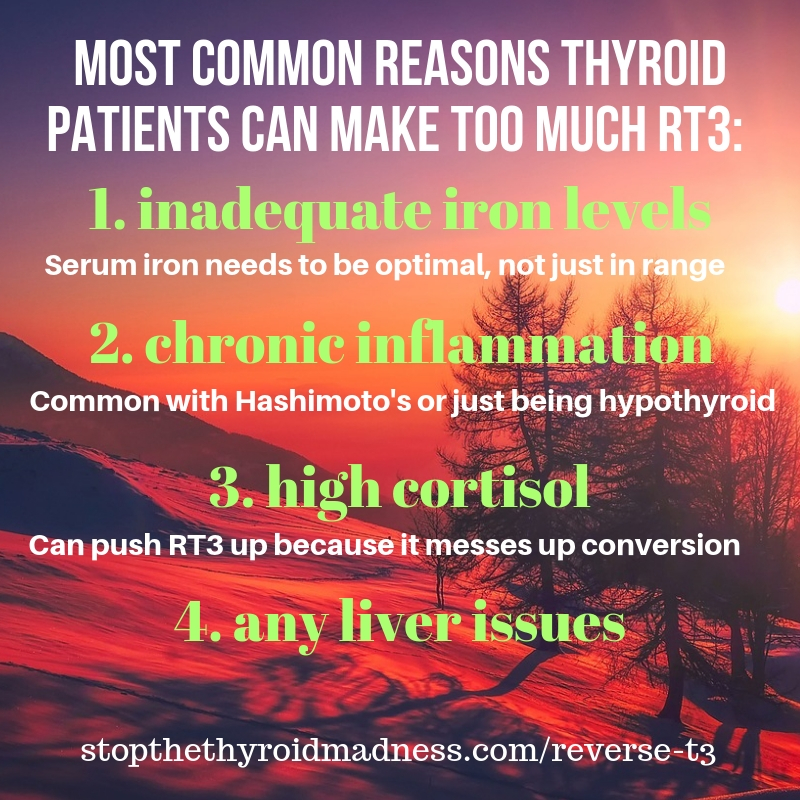
***i.e. we as thyroid patients have noted rising RT3 (reverse t3) due to 1) inadequate levels of iron (due to absorption problems), 2) having high cortisol (due to stress from still being hypothyroid or any other life situations), 3) having inflammation (such as from the autoimmune attack on the thyroid, or other reasons). Even a stressed liver can do it, but nowhere near as common as the latter three reasons. THUS, you need to do all four iron labs if you want to follow all these years of solid patient experiences. See them here. Then compare the results to here. You’ll find out if low iron is your cause, and the ferritin will tell you if inflammation is the cause, because your body will push iron to ferritin, which is a storage protein. And here’s the test of see if you have the third cause: high cortisol.
Are there other reasons for too much RT3, even though the above are the main reasons for hypothyroid or Hashimoto’s patients??
Yes, they include:
- Beta-blocker long-term use such as propranolol, metoprolol, etc. See this study.
- Physical injury, a common cause of increased RT3
- Illnesses like the flu, a common cause of increased RT3
- Starvation/severe calorie restriction is known to raise RT3. See this study.
- Diabetes when poorly treated. See this study.
- Lyme disease
- Cirrhosis of the liver (page 38 here)
- Fatty liver disease
- Any other liver stress
- Renal Failure (page 38 here)
- A fever of unknown cause (page 38 here)
- Detoxing of high heavy metals
- Thyroid removal Surgery or other surgeries of any kind
- Gum or tooth infections
- Activation of the Deiodinase (DIO1) enzyme mutation See this study.
Lithium is sometimes stated to increase RT3, but for most, it has not! Lithium in large doses instead inhibits the release of thyroid hormones from one’s thyroid due to the blocking against iodine, and instead, can lower RT3. http://press.endocrine.org/doi/abs/10.1210/jcem-43-3-606?journalCode=jcem But note that we’re not talking about the very low doses of lithium that some take to help their methylation issues.
Excessively low carb diets are sometimes stated to increase RT3, but studies don’t show this. Instead, it may be more about calorie restriction.2
Think that rising RT3 isn’t a problem??
Then you need to read what the wonderful Australian website custommedicine.com.au has to say:
“Many endocrinologists believe that reverse T3 (3,3’,5-triodothyronine) is only an inactive metabolite with no physiologic effect. This is an erroneous belief as this and other studies demonstrate that reverse T3 (rT3) is a more potent inÂhibitor of T4 to T3 conversion than propylthiouracil (PTU) which is a medication used to decrease thyroid function in hyperthyroidism. In fact, rT3 is 100 times more potent than PTU at reducing T4 to T3 conversion. Clearly demonstrating that rT3 not just an inactive metabolite, but rather a potent inhibitor of tissue thyroid levels…..”
Above based on the research titled A study of extrathyroidal conversion of thyroxine (T4) to 3,3’,5-triiodothyronine (T3) in vitro. Endocrinology;101(2):453-63. Chopra IJ
Did you know that bovine desiccated thyroid can cause high RT3?
Yup. Not everyone sees it, but a lot do, even without the typical causes of higher RT3 due to low iron, high cortisol, etc. We surmise that bovine (cow) thyroid has higher levels of T4 compared to porcine (pig), or even human thyroid. We’ve also found research that points to certain times of the season pushing RT3 up in dairy cows, which is stated to be similar to “euthyroid sick syndrome”. Would it happen to any cow? We don’t know. All this is new information and we are still in the reading phase to figure out why we are seeing higher RT3 in bovine over-the-counter thyroid products….
What are symptoms that I have an RT3 problem?
Since Reverse T3 is an inactive hormone, and since this hormone in excess acts like an inhibitor of T3 in the cells (see this research–one of several), the symptoms are “increased hypothyroidism”! And we also see proof of this increased hypothyroidism, because our rising RT3 seems to accompany a lowering of FT3 in our labs. This could include more fatigue, for example, or an increase in adrenaline creating anxiety, or increased depression, or an increased need to nap…on and on. Or a rising RT3 can mean that no matter what you have done, you still have irritating hypothyroid symptoms!
Can lab work help me discover this? What do I look for?
1) The best way is to do the RT3 lab test.
A healthy level of RT3 will be the bottom two numbers of any provided range, we have noticed. So if your range starts at 8, then 8 or 9 are pretty common for a healthy level of RT3. Third from the bottom (10 if the range starts at 8, for example) may be fine, too, we have noticed. Any higher and we’ve got rising RT3, we’ve seen before. There are even some whose RT3 is slightly below range and not a problem.
2) Even before you or your doctor thinks of doing an RT3 lab test, thyroid patients feels there’s room to be suspicious when....
- the Free t4 is much higher in the range for awhile, especially above 1.4 if using the ranges where the top of the range is 1.7.
- your Free T3 is extremely low–the result of excess RT3 blocking the cell receptors from getting T3. Very common.
- having pooling aka a high Free T3 due to adrenal or iron problems. i.e. the high free T3 doesn’t cause rising RT3, but both can eventually happen in tandem for many.
3) What about doing the FT3/RT3 ratio? Not really needed. But read below.
We used to do the ratio to see if we had an RT3 problem. It was about dividing the Free T3 by the Reverse T3 (Free T3 ÷ RT3) or dividing the Total T3 by the RT3 (total T3 ÷ RT3)…though they need to be in the same measurement or changed to the same measurement. Using the FT3/RT3 ratio, the ratio result should be 20 or larger according to Dr. Kent Holtorf (info below). If lower, you may have a problem. Janie has noted that many patients without an excess RT3 issue have a result of 23 or 24 or higher. For the Total T3 ratio, it should be 10 or higher.
But we honestly got to where it didn’t seem to be needed when we were seeing the majority of patients (without an RT3 problem) being in the bottom three numbers of a range, or below range. If you have reason to still want to do it, figuring out your ratio is here. The Institute of Functional Medicine still supports the Total T3/RT3 ratio.
How do I treat excess RT3?
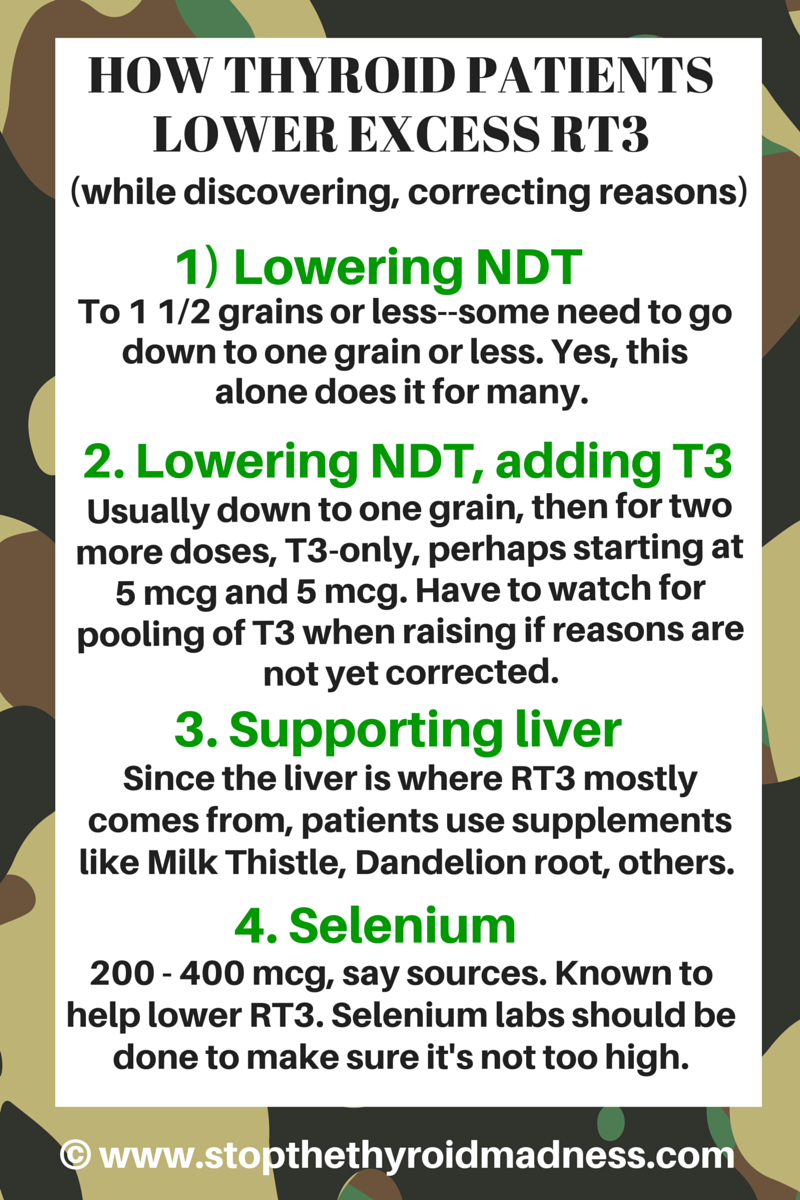
Summary: patients with high RT3 have learned to primarily lower their NDT to 1 1/2 grains or less, since RT3 comes from the T4. Some can add in T3 to that lowered dose, such as 5 mcg and 5 mcg, but it’s important to watch for pooling of that free T3. Supporting the liver has outright helped patients since RT3 is primarily made in the liver, such as using Milk Thistle, Dandelion root or other supplements. Some sources say Selenium at 200 – 400 mcg can help lower RT3, though it can be important to test your selenium levels to make sure they aren’t already too high.
Taking 200-400mcg Selenium can possibly lower high RT3… but….
Always, always test your blood serum selenium level first!! Some people have high selenium (upper part of range or above). You don’t want to be taking selenium supplementation on top of already too high levels.
And here’s one medical article on selenium supplementation lowering RT3: “After 3 wk of selenium supplementation (1 microgram/kg/d), both the concentrations of the prohormone thyroxine (T4) and the metabolic inactive reverse triiodothyronine (rT3) decreased significantly.” https://pubmed.ncbi.nlm.nih.gov/7779569/ And the second BUT: you still need to treat the causes for rising RT3 or it will come right back up! LEARN!
NOTES:
a) Sources say Milk Thistle (for the liver to help lower high RT3) needs to come from the seeds. Milk Thistle not from the seeds can have an estrogenic effect. Some patients use two more more supplements to improve liver and lower RT3.
b) If on synthetic T4 and synthetic T3 with high RT3, patients are known to hugely lower the T4, or scrap the T4 for awhile, and make up the difference with added T3 to the current T3. See the T3 chapter in this book.
c) See the Odds and Ends chapter in the updated revision STTM book for more about iron
If I’m lowering my NDT or T3 due to high RT3, can I go down immediately?
Yes, report patients. And many then add some T3 to make up for the loss of what was lowered. See more in the T3 chapter of this book.
How do I dose T3 if I choose to use that to lower my RT3?
Excellent patient information is found in the T3 chapter here. Share this information with your doctor.
What if my doctor pooh-poohs this problem with Reverse T3?
Share the following with him or her, i.e. even the pharmaceutical company which makes the injectable form of T3 called Triostat states the following:
The prohormone T4 must be converted to T3 in the body before it can exert biological effects. During periods of illness or stress, this conversion is often inhibited and can be diverted to the inactive reverse T3 (rT3) moiety. http://www.drugs.com/pro/triostat.html
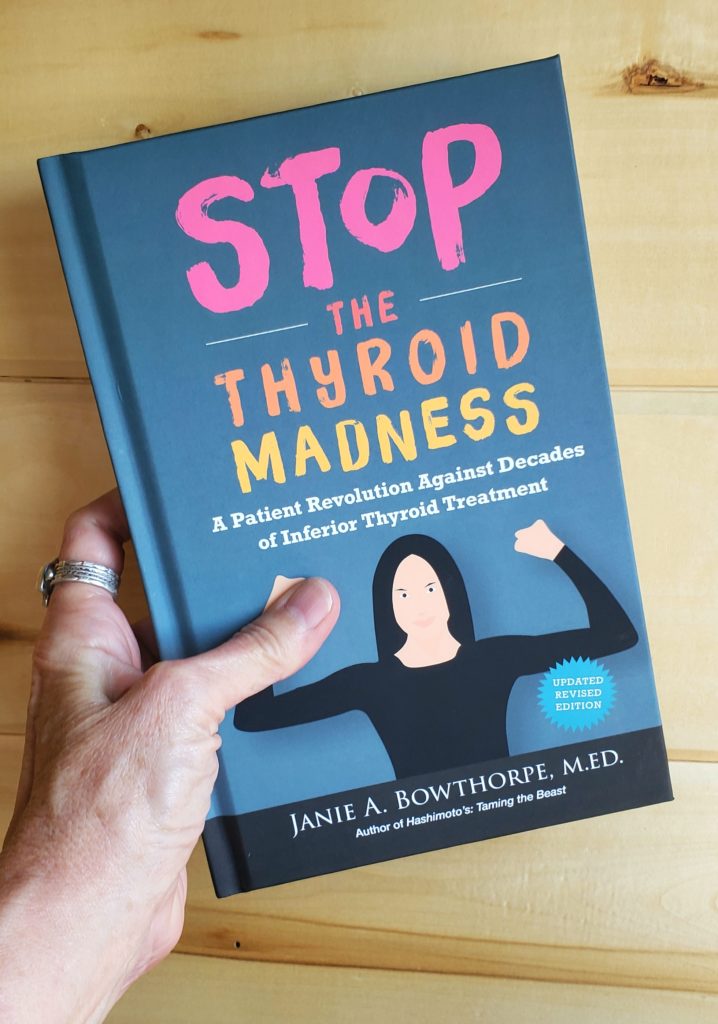
Is this RT3 info in the updated revision STTM book?
Yes, you’ll find good info about the Reverse T3 in the T3 chapter which can be taken into your doctor’s office and referred to, as needed, as you work to teach your doctor about its use. It’s also mentioned elsewhere in this life-changing “bible of thyroid treatment”. https://laughinggrapepublishing.com/product/sttm/
Can I make too much RT3 simply from over-dosing the T4 in my treatment?
Definitely. We’ve seen it happen a lot over the years in each other. I, Janie, accidentally had that happen, too, when I was on on prescription desiccated thyroid, moved from 3 1/2 grains to 4 grains one year recently, thinking an issue I was having meant I needed more thyroid. I was wrong. So my body had too much FT4 at 1.5 (top of range was 1.7), and it converted to higher and higher levels of RT3 to clear it out in the next few months.
What about Australian ranges? Other ranges that don’t begin with 8 or 9?
Australia RT3 ranges tend to be (140-540) or (170-450) pmol/L. With the former range, a healthy RT3 result would be around 165 or less by observations. For the latter range, a healthy RT3 result would be around 196 or less.
Where in Canada can I get RT3 lab work?
Three known places: lifelabs.com/, www.cdllaboratories.com/en/ and dynacare.ca/. Canadians: do these websites still exist?? LET JANIE KNOW. There may be more since I, Janie, wrote this page.
Can I order my own labwork for this, since I doubt my doctor will do this?
To order your own labwork, go here and scroll down to see facilities.
****************
- Have more good research studies for this RT3 page? Send them to STTM via the Contact link below.
- Where can I talk to others about this?? Go here.
- See a blog post about RT3: https://stopthethyroidmadness.com/2009/11/18/reverse-t3/
- Read what Dr. Holtorf says about RT3 here. If you scroll down on the page, you’ll also see mention of a study done with elderly men and RT3.
- Additionally, in the study article titled “Reverse T3 is the best measurement of thyroid tissue levels” found in the 2005, volume 90 issue of The Journal of Clinical Endocrinology & Metabolism, it states that “the T3/rT3 ratio is the most useful marker for tissue hypothyroidism and as a marker of diminished cellular functioning.” But again, we found it good enough to just look where our RT3 was falling in a range.
(1) http://press.endocrine.org/doi/abs/10.1210/jcem-41-6-1043
2) http://press.endocrine.org/doi/abs/10.1210/jcem-42-1-197
Come on over to the STTM Facebook page for daily tips and inspiration!
Important notes: All the information on this website is copyrighted. STTM is an information-only site based on what many patients worldwide have reported in their treatment and wisdom over the years. This is not to be taken as personal medical advice, nor to replace a relationship with your doctor. By reading this information-only website, you take full responsibility for what you choose to do with the information on STTM or its outcomes. See the Disclaimer and Terms of Use.