All the below is COPYRIGHTED BY STOP THE THYROID MADNESS, LLC. This was originally written by Bob, a man who has dealt with both hypothyroid and adrenal issues, so the personal comments are by him. More updates have been added as patients continue to learn, and by me, Janie Bowthorpe.
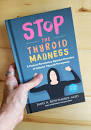
If you haven’t bought the updated revision Stop the Thyroid Madness book, it is highly recommended. Chapter 6 has immense details on the proper use of HC or ACE as experienced and practiced by patients for years now. Go here.
ABBREVIATIONS: ACE stands for Adrenal Cortex Extract, which we just call Adrenal Cortex. NDT stands for Natural Desiccated Thyroid (though the American brands are not as excellent as they used to be–FYI). EBV is Epstein Barr Virus.
1) What are the symptoms of having an adrenal problem? Fatigue, anxiety, light-headedness, shakiness, dizziness, nausea, feeling unrefreshed after getting up in the morning, insomnia, waking up in the middle of the night, difficulty dealing with stressful situations, overreacting, overly defensive…plus problems raising NDT or T3. Dr. Rind says “Most people have a mixture of poor thyroid and poor adrenal function rather than purely one or the other, and therefore a mixture of symptoms”. He also says that poor thyroid and/or adrenal function is the most common cause of low metabolic energy. Metabolic energy defined as the chemical changes in living cells by which energy is provided for vital processes (Websters).
2) How can I tell if my problems are adrenal or thyroid? The body’s temperature drops as the metabolism drops. Low temperatures are caused by low thyroid. If the adrenal hormone cortisol is low, the average daily temperature (DAT) will fluctuate when comparing one day’s average to the next. (See Chapter 5 in the updated revision STTM book). We are not talking about temperature changes during one day — it is normal to wake up with lower temperatures and hitting a peak in the later afternoon. Take your temperature 3 hours after waking, again 3 hours later, and again in another 3 hours. You average those 3 readings to get one single number for that day. Please read Janie’s page https://stopthethyroidmadness.com/temperature/
3) Is this the same as Addison’s Disease? For the vast majority, we had patients have repeatedly seen no, it is not. Addison’s refers to the autoimmune destruction of the adrenal gland and means the adrenals are sick and just don’t produce enough cortisol. Instead, we just get overly-stressed adrenals from being hypothyroid.
If you search for information on Addison’s disease, you fill find quotes such as this one: “Adrenal insufficiency occurs when at least 90 percent of the adrenal cortex has been destroyed.” http://endocrine.niddk.nih.
4) If most hypothyroid patients do not have Addison’s Disease, why do they get a cortisol problem? It’s We as patients have noted that it seems to be primarily due to the chronic stress caused by being undiagnosed (going by the lousy TSH lab test for one), or poorly treated with T4, mainly. It can also happen to those who had their thyroid removed. Adrenal issues can also occur due to chronic illness, chronic life stress, weight lifting without breaks, mold exposure, detoxing heavy metals, chronic Lyme and more. First, cortisol will go quite high. Then it falls partly due to significantly diminished output of cortisol in response to the chronic stress.
Read the last chapter in the STTM II book for excellent detail as to reasons this happens to so many. Get informed!
Many members discovered their adrenal fatigue when they tried to raise their natural desiccated thyroid or T3–they have problems! https://stopthethyroidmadness.com/things-we-have-learned
5) How do I test to see if I have an adrenal problem? There is a strong list of excellent “Discovery Steps” in Chapter 5 of the updated revision STTM book–the bible of thyroid treatment information. Note it’s NOT about blood testing once you discern by the Discovery Steps that you have a problem. It’s about Saliva testing. Here’s an excellent one to order on your own.
6) Is saliva testing as accurate as blood labs for cortisol levels? Saliva is far more accurate since it’s measuring unbound useable cortisol. Even our experiences reveals that. Blood cortisol is mostly bound cortisol, 80% or more…plus is only done once a day–very inadequate. Saliva testing is measuring what is available for use i.e. unbound, plus at four key times. This is a very good one you can order on your own.
7) How do I do the saliva spit, etc? Sniff on a jar of pickles, relish, or a lemon. Drink lots of water or liquids the day before. It can take 20-30 minutes per tube. See what is explained in the updated revision STTM book.
8) Can I test my cortisol levels with saliva testing if I am taking HC or a product like ACE? No. The medicine will throw off the result of the test causing false highs, or lows. https://stopthethyroidmadness.com/supplements-and-meds-which-affect-adrenals/ and http://www.macses.ucsf.edu/
9) Will my doctor agree with the 24 hour cortisol test (saliva testing)? Some will; many are clueless about it. Mine did. He had the saliva lab boxes right in his office. You may have to drive to a larger city to find a doctor familiar with treating cortisol. Or, you can order the Saliva test yourself, see what result comes back, and learn how to read lab results. More on all this in the updated revision STTM book.
10) Can my doctor give me or prescribe a saliva test? Some have them on hand, but beware: many are using facilities that create saliva tests with “less than” or “more than” ranges or numbers. We have found that to be very inadequate. We need results with a RANGES, like this one which you can order yourself. We are comparing our results to where those with HEALTHY adrenal function fall in a range.
11) What if my doctor refuses to treat my adrenals because I don’t have Addison’s, yet saliva proves I have a problem? This is where you need to read the last Chapter in the STTM II book as to why we get adrenal problems without having Addison’s disease. Explain it to him or her! Be proactive.
12) Can you help me understand my 24 hour cortisol saliva labs? STTM has a good explanation of lab results here based on years of reported observation. More in updated revision STTM book–a book you will use a lot.
As adrenal fatigue progresses, the cortisol rhythm becomes disrupted, and often “flattens out”. This can happen even with somewhat normal levels of cortisol being produced — but the “below normal” morning cortisol tends to indicate that there is a problem. Often the person lacks adrenal reserve. During times of stress the adrenals cannot produce the extra cortisol required by the body.
As the problem gets worse, the “flattened” cortisol rhythm becomes so severe that the pattern is “flat-lining” closer to the bottom of the chart. This person could be said to have Adrenal Failure, also known as Adrenal Insufficiency. The combined cortisol readings of all 4 points of the day (called the “cortisol burden”) will be below normal range. As the adrenal fatigue progresses, the amounts of DHEA produced by the adrenals often become lower as well. Dr Lam’s article explains the reason for this. Low DHEA can be a clue to the condition of the adrenals.
13) Is stress the only thing that causes Adrenal Fatigue? It’s definitely the main cause for most! i.e. biologic stress like undiagnosed hypo, poorly treated hypo, Lyme, mold exposure…on and on. But for a very small minority, it can be due to a low-functioning pituitary gland called hypopituitary.
14) I have bloodwork for the adrenals; can you help me interpret the results? Again, we have found repeatedly that we can’t go by blood results, since it measures mostly bound unusable cortisol–the latter of which can be as high as 90% of your cortisol. It’s a saliva cortisol test which gives accurate results.
15) How can I order more lab tests in addition to the saliva test? STTM lists facilities here.–just scroll down on that page until you see the rectangular icons on the left. You’ll see ULTA and more. You CAN do this on your own!
16) Do adrenal glandulars that I can get at a health food store work to treat my low cortisol? There are some members with very mild cases of low cortisol, as shown by saliva testing, who feel some improvement from over-the-counter adrenal supplements. But there’s a caveat: if the supplement is made up of the entire adrenal gland (which adrenal glandular is), you will get adrenaline, which is made in the medulla of the gland. If we already are making too much adrenaline, adding more adrenaline on top of it has not been helpful. Using an adrenal supplement with only the cortex (where cortisol is made) has worked better.
17) Adrenal Cortex aka ACE, which contains cortisol, does not require a prescription — where do I get it? It’s all over the internet. 50 mg capsules is the common amount used. But remember–it is not to be used willy-nilly and should be based on saliva test results. Working with a doctor can be a good thing IF they understand all this. But let’s not get ahead of ourselves. Keep reading. And we have found that ACE is too weak for most low cortisol results.
18) What else should I be doing to help the adrenals? Good sleep is very important, and try to keep a consistent schedule every day. Strategies to counter stress important. The adrenals run on salt, so 1/2 teaspoon mixed with a large glass of water in the morning, and again later in the day, has helped some patients. Small but frequent meals (to help with blood sugar). Vitamins including B-complex after meals.
19) What medications are prescribed by a doctor for the adrenals? In Dr Peatfield’s book, he says “Undoubtedly for the physician, the replacement of choice is hydrocortisone, since this is synthetically produced, is identical to naturally produced cortisone. http://featherstone.bravehost.com/thyroid/peatfieldadrenal.html” Hydrocortisone/HC requires a prescription, and is sold under the brand name Cortef. We have found that HC is most beneficial for seriously low saliva results three or more times together.
Only very minor low cortisol, as proven by saliva results, “may” do well on Adrenal Cortex (ACE), which is over the counter. Excellent details on its use in the updated revision STTM book.
20) How do I start Hydrocortisone or ACE? Chapter 6 in the updated revision STTM book is the most helpful information anywhere based on patient experiences in their use of HC or ACE. Than DATS are done–see #21 below. Hopefully you can find a doctor open to the information to work with you.
21) How do I dose 25mg, or 30mg of HC if all times are low?
Chapter 6 in the updated revision STTM book. You’ll see why 20 mg is actually too low.
22) How do I dose HC (or ACE) if my bedtime cortisol is high while the others were low? Check Chapter 6 in the updated revision STTM book.
23) How do I find the right amount of HC or ACE ? At It’s all about doing your Daily Average Temps. Study Chapter 5 in the updated revision STTM book, plus more in Chapter 6. It’s taking three temps, starting three hours after waking, then every three hours, adding them up, dividing by 3 and coming up with an average. You will be comparing the averages of fives days in a row.
24) Why take more HC or ACE in the morning? To follow the body’s natural cortisol rhythm, which is higher in the morning. 10 mgs is the highest amount to take at any one time to prevent the shut down of the ACTH, though men seem fine going up to 12.5 since they need more cortisol overall. You don’t want to dose too high in the morning, or the body will sense the extra cortisol and the pituitary gland will reduce it’s request for the body’s natural cortisol production — and this can make you tired later in the day.
25) Why can’t I take a lower amount of HC, such as 10mg per day? Dr Jefferies states: “Most patients can be maintained on between 20 and 30 mgs. daily in divided doses. Although some patients may feel well on less than 20 mg. daily, it seems preferable to give at least this much cortisol, even to patients with low adrenal reserve, because it takes the strain off of the residual adrenal tissue and provides for more functional reserve in times of stress. Under some circumstances, it appears to provide an opportunity for residual tissue to regenerate. A few patients with low reserve have demonstrated evidence of recovery of reserve after months of even years of such treatment, but most seem to require some replacement for the remainder of their lives.”
Keep in mind that when you take a small dose such as 10, or 15, or 20 mg of HC per day, the body is going to sense that cortisol in the blood and “down regulate” it’s own production of cortisol somewhat. So it is not just adding to your cortisol, but reducing it to some extent at the same time. The same thing happens when you take thyroid hormones, the body lowers its own thyroid hormone production by lowering the TSH. But if the adrenal (or thyroid) hormones are below optimum levels, this is a decision the patient and doctor need to make.
26) What if I feel nauseated, or shaky before my next dose? These can be symptoms of the previous cortisol dose running out. So patients end up taking the next dose sooner than 4 hours. But not everyone has this problem. .
27) Why do I have trouble sleeping after starting HC or ACE? When cortisol is too high, or low, it can affect your sleep. And when members comment that they have more trouble sleeping after starting HC, it is often within the first month as the body’s metabolism is starting to wake up. During this “honeymoon” period, it is important to get good sleep — even if that means slowing down on the “normal” dose schedule, or taking a sleep remedy such as melatonin.
There are a variety of published medical articles and books saying not to take HC past the afternoon — yet many patients find that after they become accustomed to the medicine this is not a problem. If you let your cortisol get too low at night, it can wake you up with low blood sugar symptoms. Eating a small amount of protein, and a small dose of HC as you are getting to bed may help you sleep.
28) How can I tell if I am taking the right amount of cortisol for my needs? As mentioned, it’s about obtaining those five averages in a row (DATS or Daily Average Temps) and comparing them to each other. If the daily average over five days in a row is consistent day to day, within .2F or .1C degrees measured by a dependable liquid thermometer. We’re just not at all sure that any digital will be as accurate. See Chapter 5 in the updated revision STTM book. Also note that if we have low aldosterone, we will fail to get consistency of those averages and thus, keep going higher and higher with the HC.
It is vital for anyone on this journey to keep a daily log, a journal with how you are doing, your dosing schedule, and any changes that you make. Write something in it every day, and review what you wrote for clues if things aren’t going well. Resist the urge to change more than one thing at a time, and be patient. Don’t change your dosing every day — try to be consistent within medically accepted amounts.
29) Aren’t steroids dangerous — don’t they have side effects? Cortisol-type medications are often prescribed for arthritis, severe allergies and asthma because of their anti-inflammatory qualities. For someone with low cortisol, the info sheet from Merck puts this into perspective: Your doctor has prescribed Hydrocortisone for you because your body is not making enough cortisol, either because part of the adrenal gland isn’t working, or because of injuries, surgery or other stressful events. Steroids are also used by people with other illnesses. Some of the side effects and other warnings in this leaflet may apply more to them than to you. Because your tablets are being given to you to replace natural hormones that your body lacks, you should be less likely to get side effects.
“Cortisol is a normal hormone, essential for life.”McCormack Jefferies MD, Safe Uses of Cortisol
Doctor Lam says “Supplementing With Natural Hydrocortisone in doses of 2.5 to 5 mg two to four times a day (note: we have found it usually needs to be higher) can be a safe and effective way to replenish depleted adrenals. However, this should be done under the guidance of a physician and it is a prescription drug.”
There is a potential danger if you start supplementing cortisol, then stop suddenly or skip doses. See “What is an adrenal crisis” below.
30) If I take HC or ACE, will it put my adrenals to sleep? We are not talking about taking massive doses that would shut down one’s adrenal function. We are talking about taking the amount your body needs, called a physiologic dose. The latter is determined by doing your DATS aka Daily Average Temps, as outlined by Dr. Rind.
And another way to look at it: If the doctor tested the adrenals, he may find that patient is already suffering from low levels of adrenal hormone. They may already be “asleep” to a degree.
In his book “Safe Uses of Cortisol” Dr Jefferies says “It has been demonstrated that when subjects with intact adrenals receive less than full replacement dosages of cortisol, endogenous adrenal function is suppressed only sufficiently to achieve a normal glucocorticoid level. For example, subjects receiving 20 mg (5 mg. four times) daily of cortisol have their endogenous adrenal steroid production decreased by approx. 60%, and subjects receiving 10 mg. (2.5 mg. four times) daily have their adrenal steroid production decreased by approx. 30%.”Endogenous” means “originating within or produced by the body”;”glucocorticoid” means “any of a group of corticosteroids (as cortisol) that are involved especially in carbohydrate, protein, and fat metabolism, that are anti-inflammatory and immunosuppressive, and that are used widely in medicine (as to alleviate the symptoms of rheumatoid arthritis)” (Websters).
But what if you do not HAVE a normal glucocorticoid level? There have been studies on Chronic Fatigue patients taking “hydrocortisone — 25 to 35 mg per day: leads to a 20 to 35% decrease in endogenous ACTH and cortisol production… After stopping, it may take several days to several weeks to recover the previous adrenocortical status.” http://www.intlhormonesociety.org/ref_cons/Ref_cons_3_mild_glucocorticoid_deficiency.pdf
31) How much cortisol does the body normally produce? In doctor Peatfield’s book, he says “The natural output of hydrocortisone is actually variable and may be as much as 200 mg. daily under stress and 40 — 60 mg. in a normal resting state. Obviously then, a dose significantly greater than 40 mg. daily will tend to take over the adrenal production of cortisone, and the adrenals could shut down completely. It must be said at once, so long as this suppression doesn’t last too long, the adrenals will pick themselves up again, and restart producing the necessary cortisone for themselves as before.” Thyroid patients who need ACE or HC doesn’t normally get that high, though.
32) What is stress dosing and why is it used? As Dr Peatfield just said, the body makes more cortisol during times of stress. So if you are in traffic and it’s extremely stressful, your adrenals (if healthy) will release more cortisol to help you cope, deal with it all better.
But if your adrenals aren’t functioning optimally, Dr Jefferies states in Safe Uses of Cortisol: “When a patient with adrenal insufficiency encounters stress, additional cortisol is necessary to maintain normal health and sense of well-being.” Additional cortisol/stress-dosing is also important even when on cortisol, as your body is now dependent on your supplementation to mimic what the adrenals would have been doing .
The first rule is to take as little as you need to get through the stress. This does NOT mean to run your body low on cortisol, but to only dose if you really need it. Chapter 6, pages 87-88 in the updated revision STTM book explain in more detail about stress dosing, whether to counter everyday stress single events, or the flu or illness. Flu viruses are stated to attack the adrenals, thus the need for extra cortisol as explained the chapter.
It’s even recommended to take 20 mg HC at the first sign of an illness. .
SURGERIES: Make sure your anesthesiologist knows you are taking cortisol. ASK for solumedrol in the anesthesia IV. It is a normal precaution they will readily do for you for safety.
EXERCISE: While it is preferable you do not exercise to the point of needing extra cortisol, some feel it is a necessity of life to continue strenuous exercising while on adrenal meds. If you are exhausted after exercise, or take hours to recover, STOP. You are doing more damage to your adrenals and are undoing any good you might be doing by treating them. If you just need energy boost to do light exercise, try 5-10MG before starting the exercise. The trick is to supply the cortisol before your adrenals are being beat up for not having it.
Tapering off stress doses is also explained on page 88 if the stress dosing occurred more than three days. If you start to feel exhaustion or especially flu like symptoms, go back up immediately and slow the decrease down.
33) Will I be stuck on HC or ACE for life? Most thyroid patients who have low cortisol are NOT stuck with it for life if they treat all the causes of adrenal stress. i.e. most report having to be on HC or Adrenal Cortex for several months (even to a year to get more serious issues treated). Says a patient: “My adrenal insufficiency was not diagnosed for many years. Taking the proper remedy was like putting on glasses, and being able to see clearly for the first time. You wouldn’t have a problem wearing glasses every day, if you needed them. If I don’t wear my glasses (or contacts) I cannot see well enough to drive. I am thankful to be born in a century where glasses are available, and I can buy pills to replace my missing hormones.”
34) How do I wean off HC or Adrenal Cortex (ACE) ? When all issues are corrected–hypothyroid, low B12, low iron, chronic inflammation, Lyme, mold exposure, detoxing of heavy metals, candida die off, high life stress and anything else which could be stressing one’s adrenals–patients start to remove their cortisol supplements by small amounts i.e HC by 2.5 mg, or ACE by 1 caps, sometimes 2 caps, holding each removal for a good 2 or 3 weeks to give the body a chance to ramp up its own production. Starting the reduction with the latest dose and moving up is done by many patients.
While on the reduced dose, be alert for the need to “stress dose” rather than suffer through symptoms of low cortisol. This will help your chances of successfully weaning off. And if you do wean completely off HC, be alert for the need to stress dose if there are signs of low cortisol during times of stress or illness. Many weaned patients will need to be on supportive vitamins and herbs, and avoid stress.
Using the T3CM has helped people wean off in a month!
35) Will HC kill my immune system? Too much cortisol can suppress immunity, so it is listed as one of the possible side effects on warning labels. And that is why we become quite informed and learned how to find our correct “physiological dose”, not those high pharmacological doses. Physiological doses are found by doing our Daily Average Temps, and they do not kill our immune system. In fact, they enhance it.
Dr Jefferies says “The mobilization of at least some of the components of the immune response may depend upon the presence of adequate cortisol, since adrenally insufficient subjects are not able to produce a normal immune response. Hence, administration of physiologic dosages of cortisol may help to prevent the lowering of resistance that enables an infection to start or, after an infection has started, may assist the immune response and enable the person to recover more quickly. If, however, an excessive amount of glucocorticoid is present before an infection develops, the immune response may be blocked or misdirected, allowing infections to develop and progress abnormally.”
Dr Jefferies also says “Most patients can be maintained on between 20 and 30 mgs. daily in divided doses.” From this, you could assume that doses beyond 30 mg HC would not be good for the body’s natural immune system…but…our experiences show otherwise since “some” women end up optimal on 30 mg+-, and men higher…without problems to their immune function. See #41 below. And the use is temporary.
36) What is a “physiologic” dose of cortisol? Dr Jefferies says “When applied to hormone actions, a “physiologic” dosage implies one that promotes normal function, whereas a “pharmacologic” dosage is one in excess of normal requirements and hence, one that might alter normal function.” For women, a physiologic dose can be anywhere from 25 mg to 32.5, but it’s very individual and DATS (Daily Average Temp taking) help find it. See page 58 in the updated revision STTM book about DATS.
37) What precautions should I consider before starting HC that my doctor prescribed? You should have enough medicine so that you never run out, and always take a few extra days worth of medication with you whenever you leave the house. Dr. Jefferies says “Patients with adrenal insufficiency should be cautioned to carry ID cards stating their diagnosis, treatment, etc.” A medical bracelet is a good idea. If a person is not going to be consistent with taking their medicine, skipping doses, or leaving the house without their pills, it may be better not to start. Some keep Hydrocortisone cream with them.
38) Do some people have a reaction to the medication? If someone is going to have an adverse reaction to HC, it will usually happen within an hour of taking the medicine. This is important to remember, because there is a completely different reaction that can happen a few hours after taking the medicine, which is a LOW CORTISOL reaction (different than a reaction to the medicine). The person’s ACTH will be lowered somewhat by the HC, then after a few hours the HC begins to run out, and the person may feel fatigue, nausea, or shaky. The solution is to take the next dose, and consider smaller doses closer together.
39) What is a “Thyroid Dump”? It’s two things: first, if you your free T3 is high and you get on HC or ACE, the T3 is suddenly able to get to the cells, causing extreme hyper symptoms. Second, the dump of thyroid hormones into your cells can cause adrenaline rushes. When that happens, you may feel extreme anxiety, racing heart, and/or other uncomfortable symptoms.
40) What is an adrenal crisis? (AKA “addisons crisis”) An abrupt life-threatening state which is caused by insufficient production of cortisol by the adrenal gland. A typical finding in Addison’s disease. Individuals who have been taking corticosteroids (glucocorticoids) for a prolonged period of time (weeks to months) are at risk for acute adrenal crisis if the medication is stopped abruptly. For this reason, corticosteroid medication are withdrawn slowly on a diminishing dosing schedule.
Symptoms of an adrenal crisis include low blood pressure (shock), weakness, headache, vomiting, fever chills, tachycardia and sweating.
Treatment includes blood pressure support and intravenous hydrocortisone. Tachycardia means “Rapid beating of the heart, conventionally applied to rates over 100 per minute”
If you are consistent with your medication and always bring a pill box with you so that you can stress dose, you can avoid this problem. Persons with severe adrenal insufficiency are advised to wear a medical bracelet stating “adrenal insufficiency”
41) For a very small minority, the HC doesn’t seem to last long enough — what is Medrol? In the early years of our patient movement, we had read that HC was “not stored by the body, plus gets rapidly used; approx 2-3 hours will see it pretty well used up completely.” But the majority of reported experiences didn’t find that short 2-3 hours to be true! Many did and do find that a 4 hour spread worked beautifully. But we did note that for a very small minority, HC is metabolized faster. These few people end up talking to their doctor about Medrol. Depending on the person’s metabolism, the 1/2 life of Medrol can range from 18 to 36 hours.
42) How do I dose prescription Medrol if I’m a rare one that needs it? Conversion tables will tell you that 1mg of Medrol = 5mg of HC. Persons who are already on HC can gradually switch over to Medrol, and typically end up with about 6mg of Medrol spread out through the day. It does not need to be taken every 4 hours like you would with HC, but a typical dosing schedule might be 3 mg at wake, 2mg in the afternoon, and 1mg at bedtime. Talk to and work with your doctor about this, because we normally do well on HC.
43) Can I take time-release HC, Prednisone, or other steroid to treat the adrenals? Although a number of members have tried time-release HC, we have not seen people staying with it or liking it. As far as Prednisone, 1 mg is equivalent to 4 mg of HC, but is harder on the liver to process, so Medrol seems to be the better choice for the minority who needed long term cortisol replacement or metabolized too fast.
44) Are there other adrenal hormones that I need to worry about? Dr Lam says “As adrenal fatigue progresses to more advance stages, the amount of aldosterone production reduces. Sodium and water retention is compromised.. As the fluid volume is reduced, low blood pressure ensues. Cells get dehydrated and become sodium deficient.” http://www.drlam.com/A3R_brief_in_doc_format/adrenal_fatigue.cfm
Although the adrenals make more hormones than just cortisol and aldosterone, persons with severe adrenal insufficiency usually take simply cortisone, and if needed, supplement aldosterone with Florinef. Further information about aldosterone can be found here http://www.
45) What are the symptoms of low aldosterone? Persons with low aldosterone are unable to retain sodium, and it spills into the bladder, taking water with it. This results in frequent urination, dehydration, and/or heat intolerance. Some will sweat more than normal. Electrolytes become imbalanced, resulting in muscle twitches, heart palpitations, and the pupils of the eyes are unable to stay “constricted” when subjected to light (they “flutter”). See the article above, and follow its links to learn more about aldosterone, and how to treat it.
46) Why should I test renin along with aldosterone? If you didn’t get a full range of adrenal tests to determine if you were Primary or Secondary adrenal insufficient before starting HC, you may be able to gain insight on this by testing Aldosterone with Renin. But most of us don’t need it. It’s up to you in working with your doctor.
47) What sequence do I treat everything? What about the sex hormones? If the adrenals are weak, it is best to treat the low cortisol before working up to high levels of thyroid medication, though you can be on lower levels. And it is best to fully support these 2 before attempting to supplement the sex hormones, as they can change after the adrenals and thyroid are supported. To put it another way, if there is an imbalance of the adrenal and thyroid hormones, it can cause problems with the other hormones. If you know that you have an imbalance, it is fine to address it, but be alert for changes as your treatment progresses.
48) Will hormone medication affects my blood pressure? Yes, cortisol and aldosterone both have a direct affect on blood pressure. Persons with adrenal fatigue typically have low blood pressure, but this is not always the case!! If you have a history of high blood pressure, you should monitor this at least once a day and note what is going on in your journal. If you are on blood pressure medication, you should research how it may affect cortisol and aldosterone. If you are taking Florinef because of low aldosterone, the dose may need to be reduced in order to avoid raising a blood pressure that is already high.
49) Do these hormones affect fluid retention? They can, especially when aldosterone levels are not right. The very bottom of this web page has more information http://www.tuberose.com/Adrenal_Glands.html Low levels of thyroid can also cause fluid retention, and in turn this can raise blood pressure. Persons with these difficulties would want to note any changes in symptoms in their daily journal in order to learn what is helping, or worsening these conditions.
50) Will I recover 100% and feel normal? There are many patients who once had low cortisol, correctly treated it, treated all other issues that stress adrenals, then weaned off…are doing great. Some have to be careful during stress and support their adrenals to not see it dive again.
From Bob: After 6 months of adrenal and thyroid support, I noticed that my skin was no longer dry, cracking, and bleeding. These type of changes will help you understand that you have made progress. There may be other aspects that are not directly addressed, but you will have a better chance of success once the body’s metabolism engine is functioning.
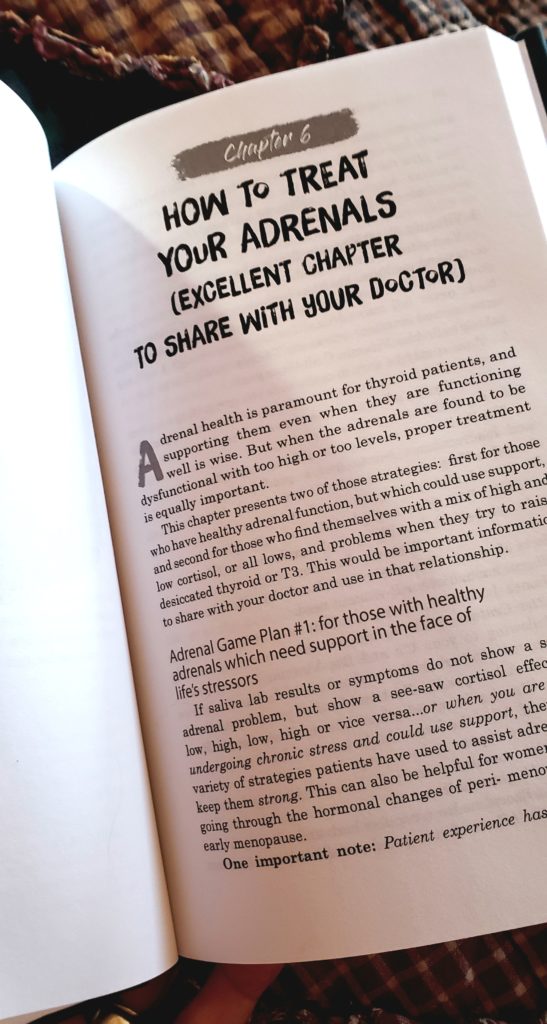
**STUDY CHAPTER 6 in the UPDATED REVISION STTM BOOK on how patients do it all. It’s chock full of details that patients have learned in the successful treatment of cortisol problems.
**STUDY THE LAST CHAPTER IN THE STTM II BOOK as to why we get adrenal problems in the first place!! It’s written by an MD and is totally brilliant as to what goes on.
And here’s one of the best saliva tests there is: https://saliva-cortisol.squarespace.com
Important notes: All the information on this website is copyrighted. STTM is an information-only site based on what many patients worldwide have reported in their treatment and wisdom over the years. This is not to be taken as personal medical advice, nor to replace a relationship with your doctor. By reading this information-only website, you take full responsibility for what you choose to do with the information on STTM or its outcomes. See the Disclaimer and Terms of Use.